

Photo source: The Coca Cola Company
At a moment when brands are increasingly looking for ways to move from communication into experience, Fanta and Xbox are launching a global collaboration that translates gaming culture into interaction, rewards and participation. The occasion is Xbox’s 25th anniversary, but the campaign goes beyond celebration, building a platform that functions as a fusion of product, content and gameplay.
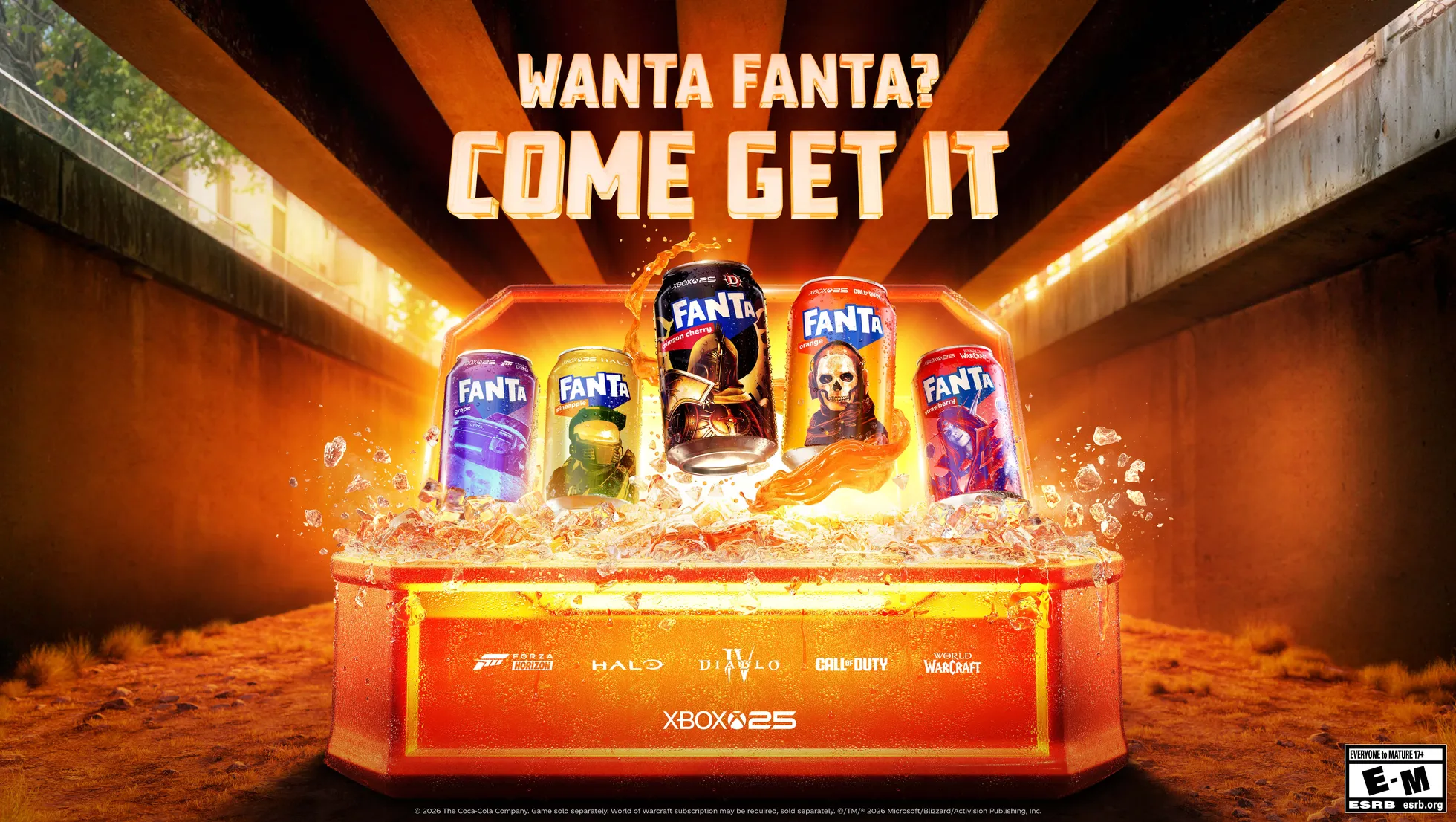
At the center of the campaign is a limited-edition packaging collection featuring some of the most recognizable characters in the gaming industry, from Halo and Call of Duty to Diablo IV, World of Warcraft and Forza Horizon 6. However, the packaging is not just a visual element. Each can or bottle becomes an entry point into a broader ecosystem through QR codes that unlock challenges, rewards and additional content.
In this way, the physical product becomes an interactive medium, and consumption turns into the beginning of the user journey.
Alongside this, the campaign introduces a new product, the limited-edition flavor Fanta Crimson, further connecting portfolio innovation with the cultural context of gaming. However, the key value lies not in the product itself, but in how it is used as a trigger for experience.
Through the so-called “Fanta Rewards Chest” challenges, users enter a series of tasks within gaming worlds, but also beyond them, with the possibility of winning both digital and physical rewards. This shifts the focus from passive consumption to active participation, where the audience not only watches content but plays it.
The creative approach further emphasizes this shift. In video spots, characters from video games step out of virtual worlds into reality to “take” Fanta from consumers, symbolically erasing the boundary between the two universes. The tagline “Wanta Fanta? Come get it” builds on the brand’s long-standing platform, but now transforms it into a challenge rather than just a message.
What makes this collaboration strategically relevant is the way it leverages the existing cultural capital of both sides. Xbox brings heritage and emotional connection with generations of players, while Fanta uses that nostalgia as an entry point for building contemporary relevance.
Particularly significant is the inclusion of titles such as Halo: Combat Evolved, which was a launch title for the first Xbox console in 2001, directly activating long-time fans and their emotional memory.
The scale of distribution further confirms the project’s ambition. The campaign will be present in more than 60 markets across North and Latin America, Europe, Asia, Africa and the Pacific, with integration across digital channels, social media and video content.
This approach reflects a broader shift in how FMCG brands enter the gaming space. Instead of traditional sponsorships or branded content, the focus is moving toward creating systems in which product, platform and experience function as a unified whole.
In that context, the collaboration between Fanta and Xbox does not appear as a one-off campaign, but as a model for how brands can use gaming as infrastructure for long-term engagement, where value is built not only through visibility, but through play, interaction and a sense of belonging.

