

Photo source: AdWeek
At a time when algorithms increasingly influence what we see, and therefore what we consider desirable, Dove continues to build its long-term platform around redefining beauty standards, this time through a physical installation that directly simulates the logic of digital feeds.
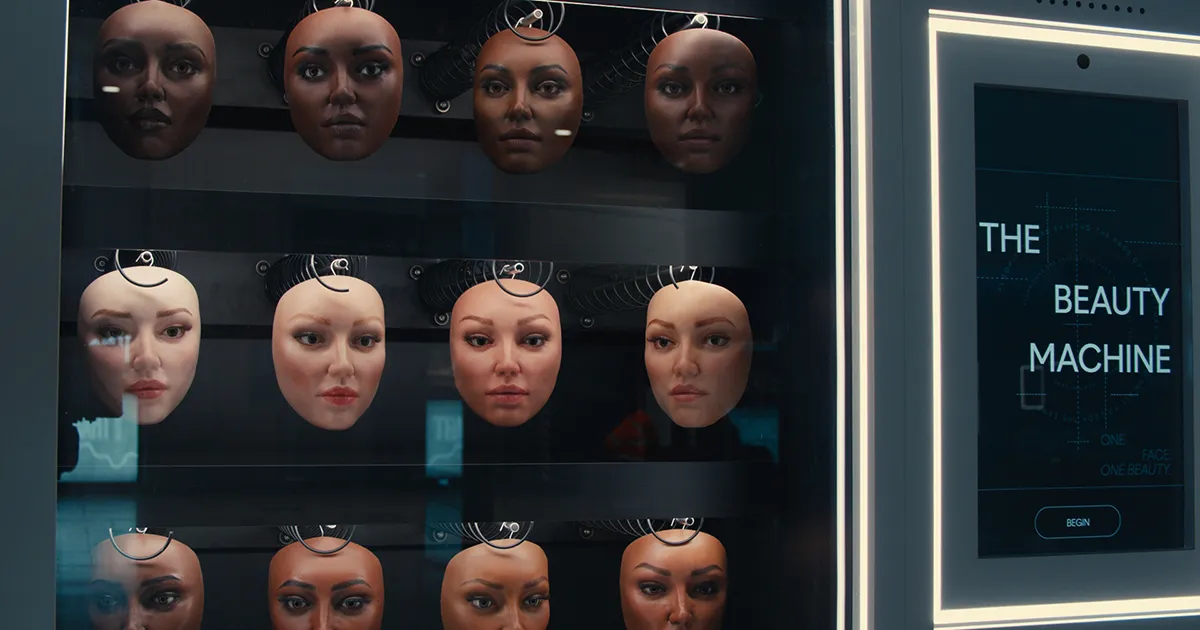
Set up at London’s Waterloo station, “The Beauty Machine” at first glance functions as a classic vending machine offering choice. However, the experience quickly reveals the campaign’s key idea: regardless of the selection, the machine dispenses the same face, reflecting the way algorithms favor certain aesthetic patterns and repeat them to the point where they become the dominant standard.
This approach stems from findings in the Dove State of Beauty research, according to which nearly half of women and girls feel pressure to change their appearance even when they know the images they see have been digitally altered. This gap between awareness and behavior becomes the central point of the campaign.
Instead of remaining at the level of communication, Dove translates the problem of algorithmic bias into an experience that can be seen, understood and felt. The installation not only illustrates how digital systems operate, but also triggers personal reflection among passersby, opening space for conversations about one’s relationship with their own appearance.
The campaign was developed in collaboration with Ogilvy and documentary filmmaker and photographer Lauren Greenfield, and its execution required translating a complex technological concept into a simple yet precisely executed physical format. It is precisely this transformation of the abstract into the concrete that forms the basis of its impact.
However, the key element is not only in demonstrating the problem, but in activating the audience. Passersby were invited to participate in an open casting by sharing their own unfiltered photos via #DoveOpenCall. Within 48 hours, their images appeared on digital billboards within the station and on the brand’s social channels, shifting the narrative from system critique to the affirmation of individuality.
In this way, the campaign operates on two levels: as a critique of the algorithmic narrowing of standards and as a platform for expanding the representation of real beauty.
This approach aligns with Dove’s long-term strategy, which for years has addressed different sources of pressure in the perception of beauty, from digital filters to selfie culture. “The Beauty Machine” represents an evolution of that platform, focusing on a new source of influence, algorithms that not only reflect but actively shape aesthetic norms.
In a broader context, the campaign also raises the question of the responsibility of technological systems in shaping social values. As algorithms reward content that generates engagement, they simultaneously narrow the range of what is seen, creating the illusion of a single ideal.
For brands, this means that communication can no longer ignore the way distribution shapes the meaning of a message. In that sense, Dove is not only talking about beauty, but also about the infrastructure that defines it.

