

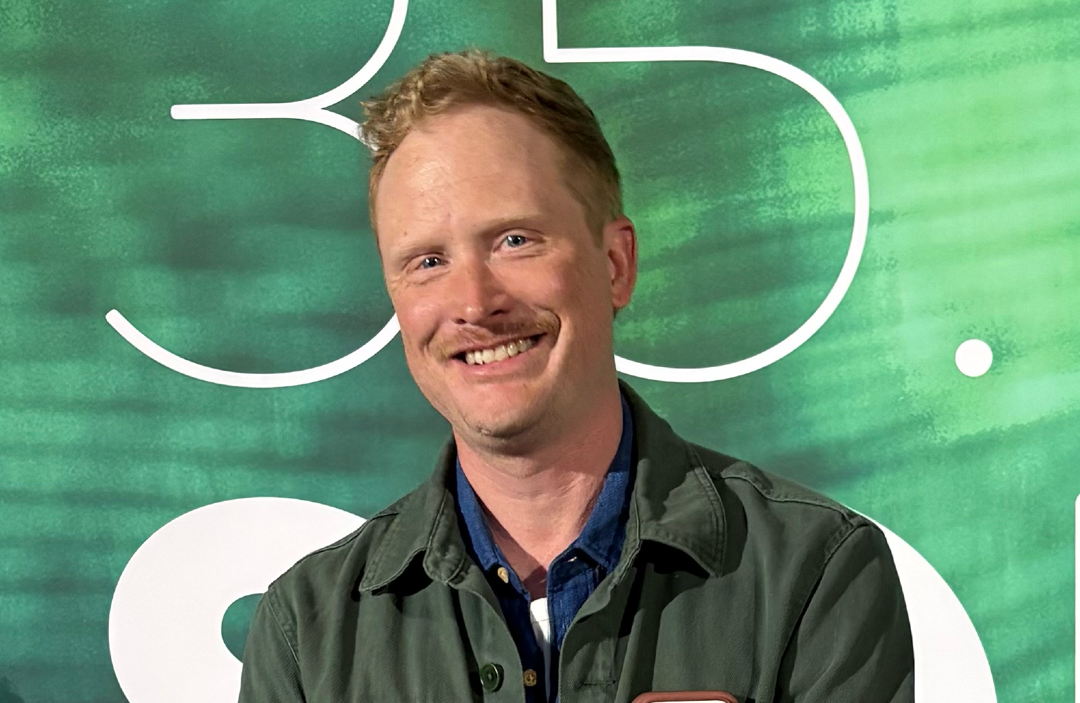
David Schwen, in his talk Everything is F*ne, delivered at Slovenia’s largest and most prominent advertising festival SOF, argued that the most compelling creativity does not emerge from complete freedom, but from the moment one begins to embrace constraints as a tool. According to Schwen, constraints are not merely limitations but structuring devices that give ideas coherence and direction. While they may initially appear restrictive, they often function as enabling conditions that expand rather than reduce creative possibility.
Schwen is a Brooklyn-based creative director and design leader with more than two decades of experience developing brand systems, packaging, and cross-platform creative frameworks for global clients including McDonald’s, The Coca-Cola Company, and PepsiCo. Across PepsiCo projects, he contributed to Super Bowl Halftime Show campaigns, the end-to-end redesign of Pepsi’s visual identity, and high-profile collaborations with cultural icons such as Shaquille O’Neal (Shaq) and Bad Bunny. His output has been recognized multiple times at Cannes Lions and featured in TIME.
Schwen further emphasized the role of curiosity and epistemic openness in the creative process, advocating for a continuous interrogation of established norms: “Maintain childlike curiosity and continuously critically question established conventions.” He highlighted that his practice is often driven by micro-observations – subtle, culturally resonant moments that audiences intuitively recognize and engage with. In his view, narrative effectiveness does not necessarily depend on complexity; rather, reduction and constraint can enhance clarity and conceptual strength.
He also noted that “small ideas often travel far,” underscoring his methodological approach to brand work, which frequently involves deconstructing established visual identities to construct alternative, often non-conventional systems of meaning. In projects for McDonald’s and PepsiCo, he employs colour as a primary semiotic and emotional device, systematically reinterpreting brand codes through deliberately unexpected visual languages that diverge from conventional advertising grammars while maintaining recognisability.
He concluded with a normative reflection directed at practitioners in the creative industries: “Do not create solely in service of the client. Ensure the work is grounded in your own values as well – it is this dual alignment that produces work with genuine energy, credibility, and cultural resonance.”

