

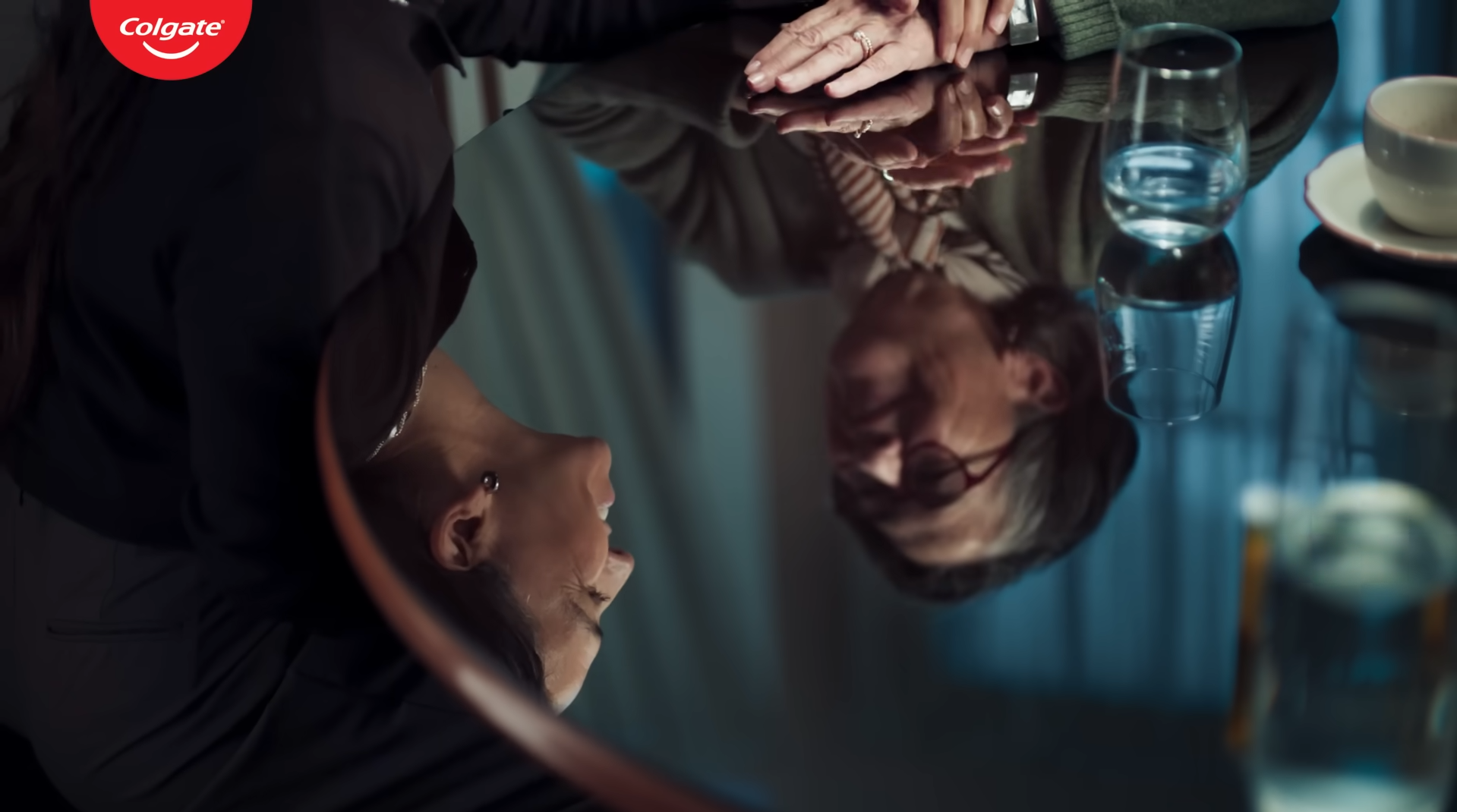
Photo source: Colgate
At a moment when an increasing number of brands are entering the space of mental health and self-care narratives, Colgate is attempting to redefine its category through the campaign “Your Smile Is Your Strength”. Instead of functional product communication, the focus shifts towards the emotional value of everyday routines and their role in building self-confidence.
The campaign, developed in collaboration with the agency VML, is based on the insight that 78% of people sometimes forget to recognize their own inner strength, while that number rises to 84% among millennials. This generation, particularly those balancing careers and caring for others, is positioned as the key target. In this context, the smile is positioned not as an aesthetic signal, but as a manifestation of resilience and a way in which individuals “choose to face the world”.
The creative execution reflects this idea through everyday situations that take place in front of a mirror, a space where, according to the brand’s strategy, self-reflection most often occurs. The perspective even comes from the product itself, further emphasizing the attempt to transform a routine into a personal moment of reflection.
The distribution model follows the logic of maximum reach and frequency. The campaign is activated through linear TV, YouTube formats TrueView and Select, Disney CTV, as well as premium placements on Meta and TikTok platforms. In parallel, more than 30 creators, including WNBA player Aaliyah Edwards, develop content that further amplifies the message through authentic formats.
An additional layer comes through a partnership with the mental health app Calm, where a set of customized meditations is developed, available via YouTube channels and the app itself. In this way, the campaign moves beyond communication and enters the space of concrete wellbeing tools, which is an increasingly common approach for brands aiming to build long-term relevance.
What makes this move strategically interesting is the attempt to expand the oral care category towards an emotional benefit. Colgate is thus not only communicating cleanliness and health, but is also trying to occupy a place within everyday rituals that shape how people see themselves.
In a broader context, this approach follows a trend in which brands such as Kind Snacks and Califia Farms increasingly use self-care narratives as a tool for building loyalty in an environment of growing consumer stress. For Colgate, which still holds a global market share of over 40% in the toothpaste category, the question is no longer just leadership in distribution, but also in the meaning the product carries.

