

In a category where product updates rarely travel beyond the shelf, Chupa Chups is doing something different. Instead of quietly introducing its new easy-to-open packaging, the brand reframes the change through a shared consumer frustration that has been hiding in plain sight for decades.
Because opening a Chupa Chups was never just opening a lollipop. It was a fight.
That insight becomes the backbone of “No More Wrestling”, a new OOH campaign developed by BBH, which treats the wrapper not as a functional inconvenience, but as a cultural ritual – one defined by resistance, persistence and, often, mild defeat.
Rather than smoothing over the problem, the campaign amplifies it.
From everyday frustration to visual storytelling
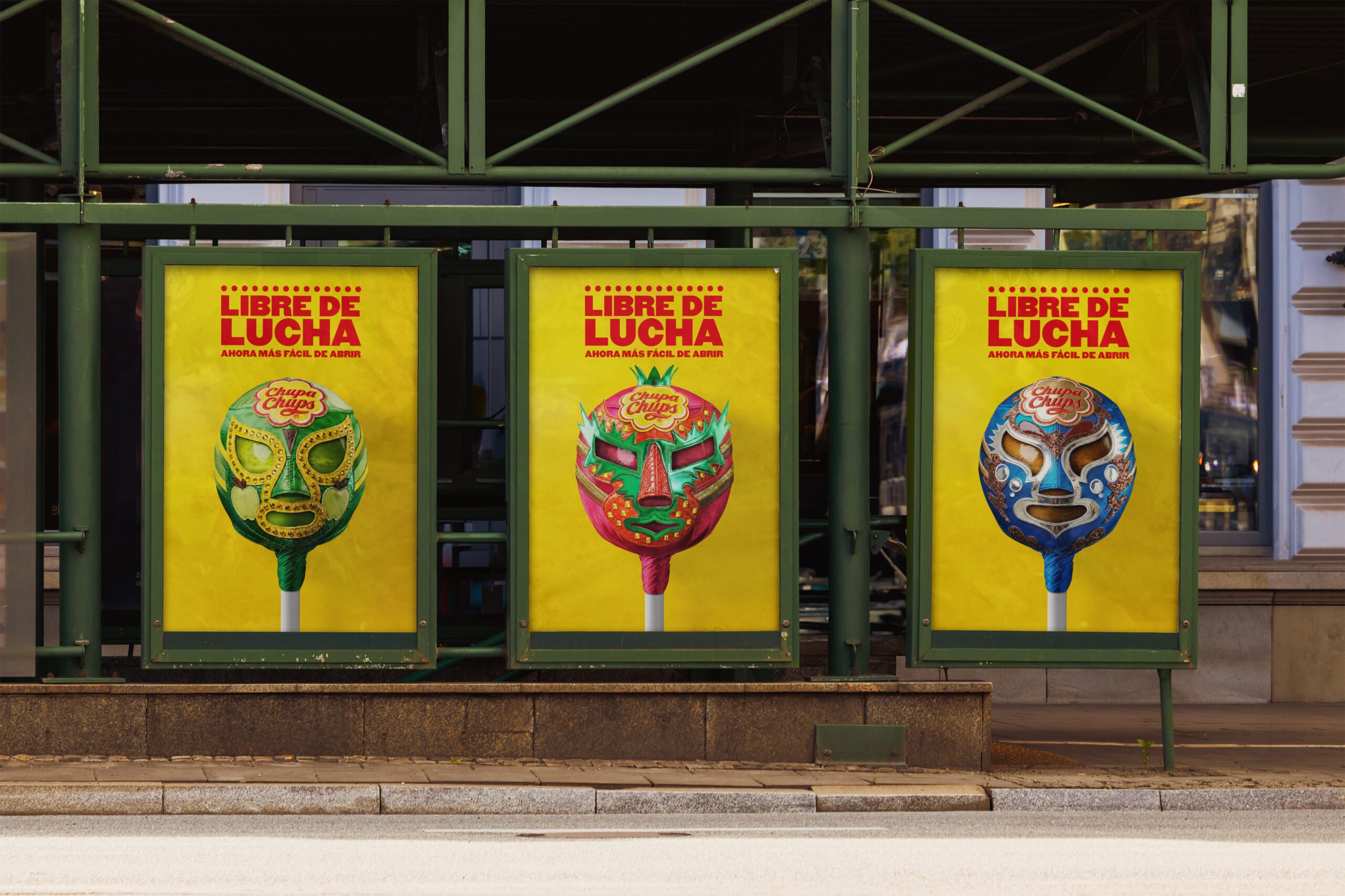
At the center of the campaign are a series of Lucha Libre masks, created from actual Chupa Chups wrappers. Developed in collaboration with Mexican mask designer Arturo Bucio, known for crafting masks for wrestling icons, the visuals translate a mundane user experience into a symbolic battle.
Each mask draws from specific product variants, incorporating design cues from apple, strawberry and cola flavors. The result is a set of characters that feel both playful and slightly absurd, but instantly recognizable.
The aesthetic goes further. Typography and layout borrow directly from traditional Mexican wrestling posters, reinforcing the narrative of conflict while grounding the campaign in a distinct visual culture.
Martin Hofling, Global Marketing Manager Chupa Chups, said, “People have been wrestling with Chupa Chups wrappers for decades. But now that the fight is over, we wanted to mark the occasion with a set of posters that are as fun, distinctive, and iconic as the brand itself.”
When product truth becomes creative platform
What makes the campaign work is its refusal to overstate the innovation itself. The packaging update is simple. But the emotional memory attached to the old experience is not.
Instead of positioning “easy-to-open” as a technical improvement, Chupa Chups reframes it as resolution – the end of a long-standing, almost universal micro-struggle.
In that sense, the campaign taps into something broader: how brands can elevate minor product changes by anchoring them in shared behavior rather than product specs.
Running across the UK and Spain in OOH and social, the campaign also signals a wider shift in how FMCG brands approach communication. Functional upgrades alone are no longer enough. What matters is how those upgrades are translated into meaning.
Here, the wrapper becomes a story. And the story becomes the message.

