

In the regional market, events are still too often evaluated by what is easiest to see: production, visual impression and the amount of content that remains after them. That, of course, is not irrelevant. But it has long ceased to be enough. Because there is a significant difference between an event that is well organized and one that truly has an authorial logic. The former works while it lasts. The latter leaves a trace even after it ends. It is precisely in this space between execution and idea that Bonjour x Via Media Gala Night becomes interesting to observe.
The value of this project does not primarily lie in production ambition, but in the way the concept took on the role of the main organizing principle. That is not a small thing. In the event industry, the reverse process is far more common: first the venue, scenography, technical execution and flow of the evening are defined, and the idea comes afterwards, as a framework meant to connect it all. The result is often events that look impressive but lack internal cohesion.
Via Media, as the author, shapes the experience and defines the way the audience perceives the event, building a clear and consistent concept that connects all segments of the evening. Together with the Bonjour platform, whose understanding of the audience, aesthetics and cultural context gives this concept an additional dimension and enables its natural reception within the lifestyle and creative scene, one of the most anticipated events on the local market has once again been created this year.
Here, the logic was different. From the concept itself emerges the way the space is read, how the audience moves through it and what it is meant to feel. This is also the most professionally relevant layer of this event. It shows that today an event can no longer be understood merely as a format of gathering, but as a medium of experience. And that requires much more than good organization. It requires precise control of attention, rhythm and perception.
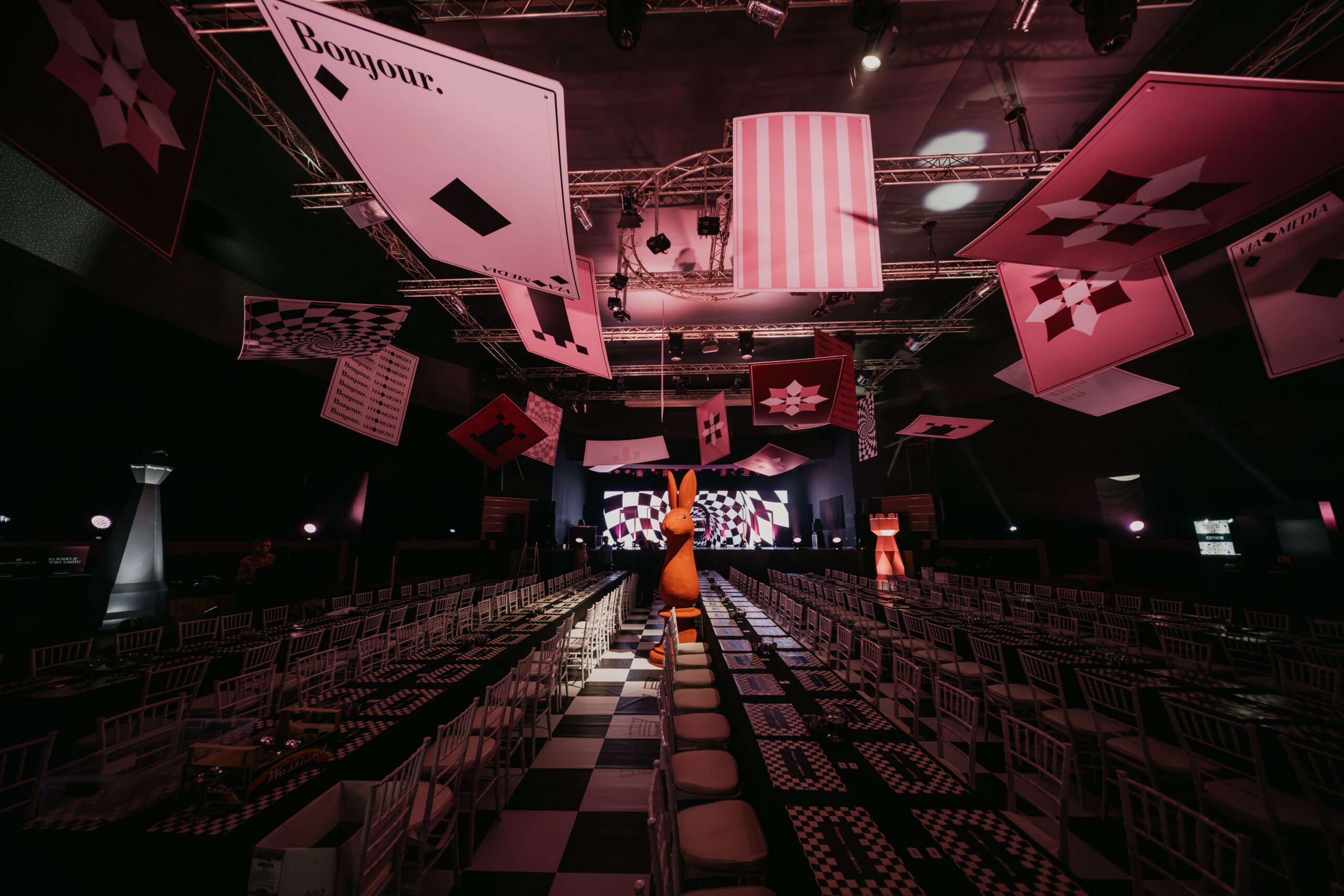
The Down the Rabbit Hole concept in this case did not remain at the level of an aesthetic reference. It was used as a principle that governs the experience, from the very entrance to the way the space unfolds before the guests. The audiovisual distortion inspired by the Doppler effect was not just an effective introduction, but a signal that one is entering an environment that intentionally shifts the sense of the familiar. From the very beginning, it established a relationship with the audience as someone who is meant to enter a different mode of perception, rather than merely observe what is happening.
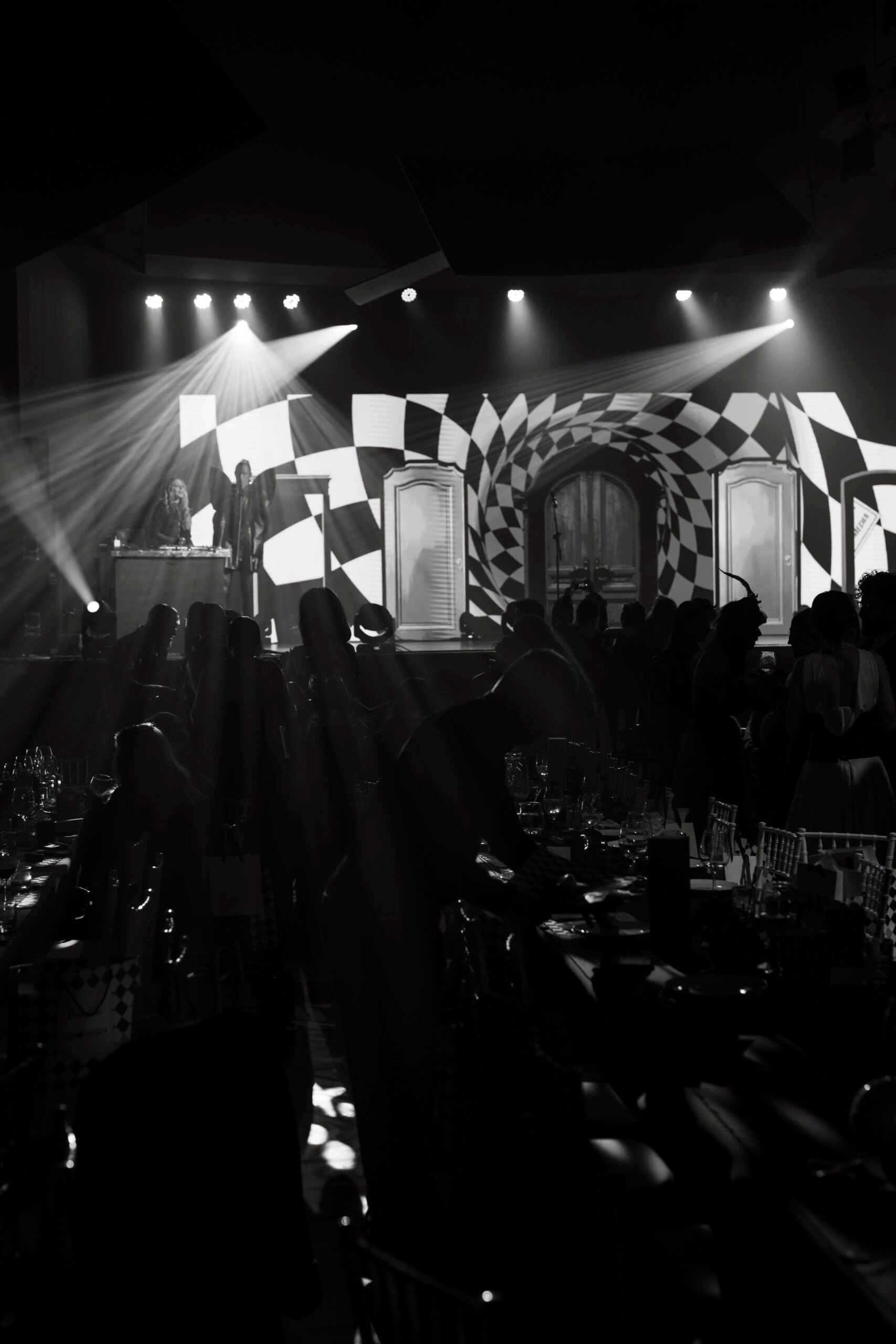
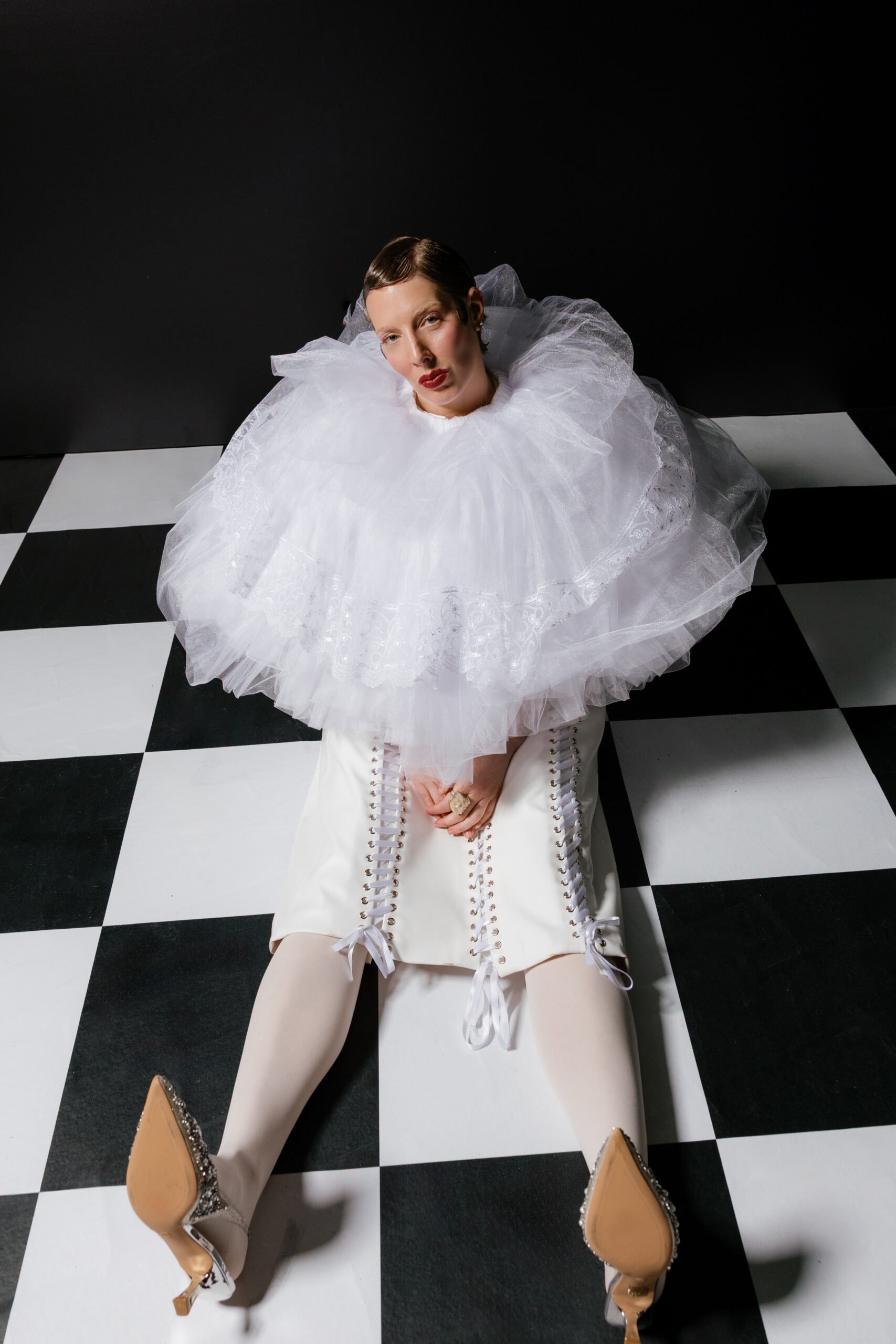
This is where we arrive at one of the key shifts shaping the event industry today. The audience no longer comes just to attend. It comes to participate, to be involved, to feel that it is part of the picture rather than just its observer. In that sense, the dress code also had a broader function than a typical stylistic guideline. It did not serve only as an aesthetic filter of the evening, but as a tool of inclusion. It gave guests a framework, but not a finished answer. In doing so, they became part of the visual and narrative identity of the event, not just its consumers.
This is especially important at a time when the relevance of an event is no longer built exclusively within the space in which it takes place. Today, an event also lives through what the audience takes from it, shares, interprets and retells. That is why participation is no longer a side benefit, but a central element of thinking. An event that keeps the audience in a passive role ends the moment the lights go out. An event that assigns it a function continues to exist beyond that.
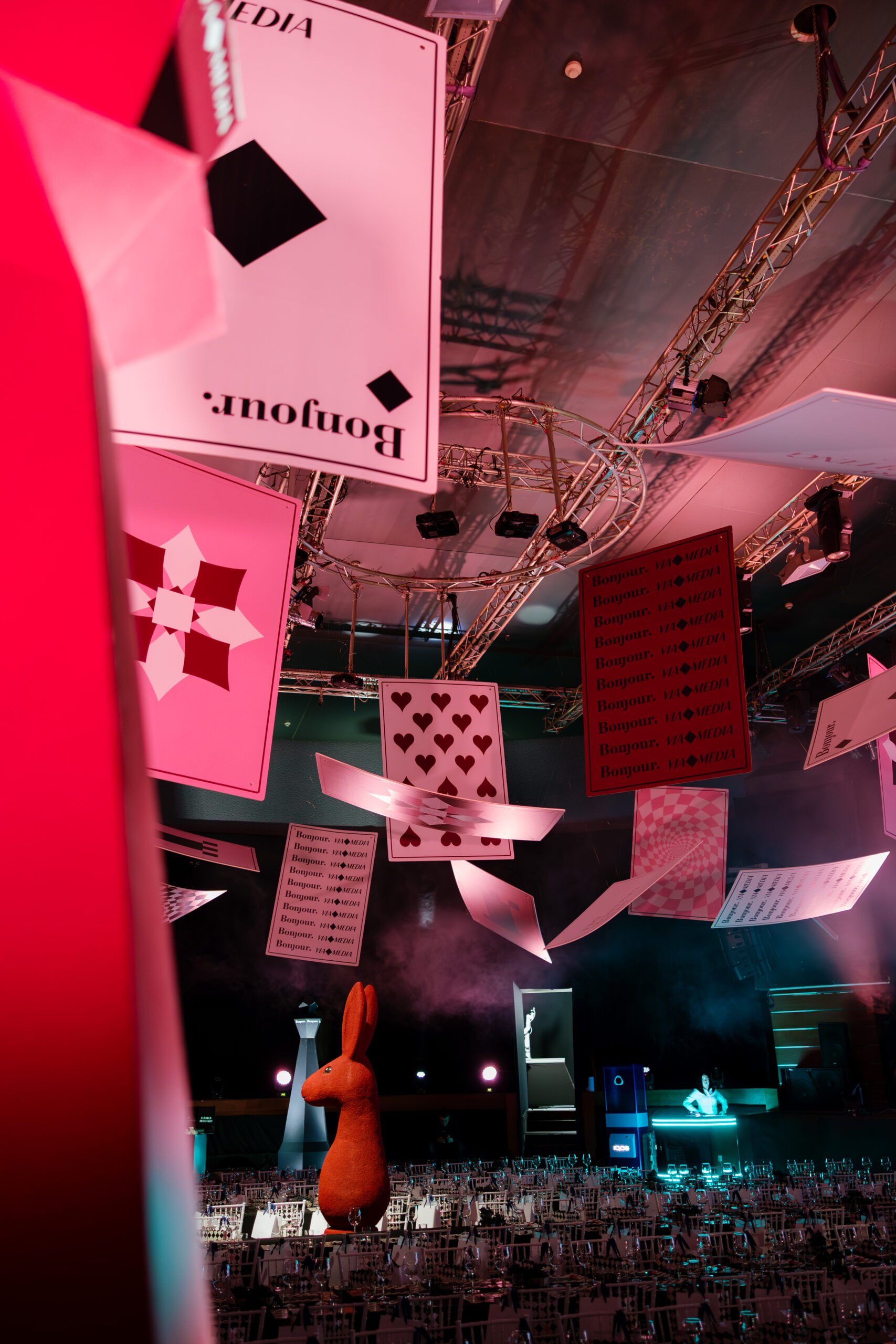
In this context, the scenography, as well as music and lighting, should be understood. Enlarged figures of rabbits and chess elements, as well as floating cards above the guests, were not there merely to produce a striking visual, but to support the feeling of displaced reality and transform the space into an active part of the narrative. That is the difference between scenography that serves as a backdrop and scenography that participates in meaning: when placed precisely, it does not decorate the event, but interprets it. The same applies to music and lighting, which in most events remain in the zone of atmospheric support, while here they had a broader role in shaping the rhythm of the evening and guiding how the space is experienced. Such use of production elements speaks to a higher level of discipline, because every segment must be subordinated to the same idea. Without that, the concept easily remains just a declaration, while the execution goes its own way.
In a market that still often remains on the surface of execution, projects like this serve as a reminder of what truly matters: that the quality of an event does not begin with what the audience sees, but with the logic by which that experience is built. And it is precisely there that the difference is made today between an event that briefly entertains and one that truly communicates.

