

Photo source: Apple
At a moment when digital advertising increasingly depends on context and user intent, Apple is taking another step forward by integrating ads into the Maps app. The new option will allow brands to appear directly within search results, as well as through the Suggested Places feature, effectively moving advertising closer to the moment of decision-making.
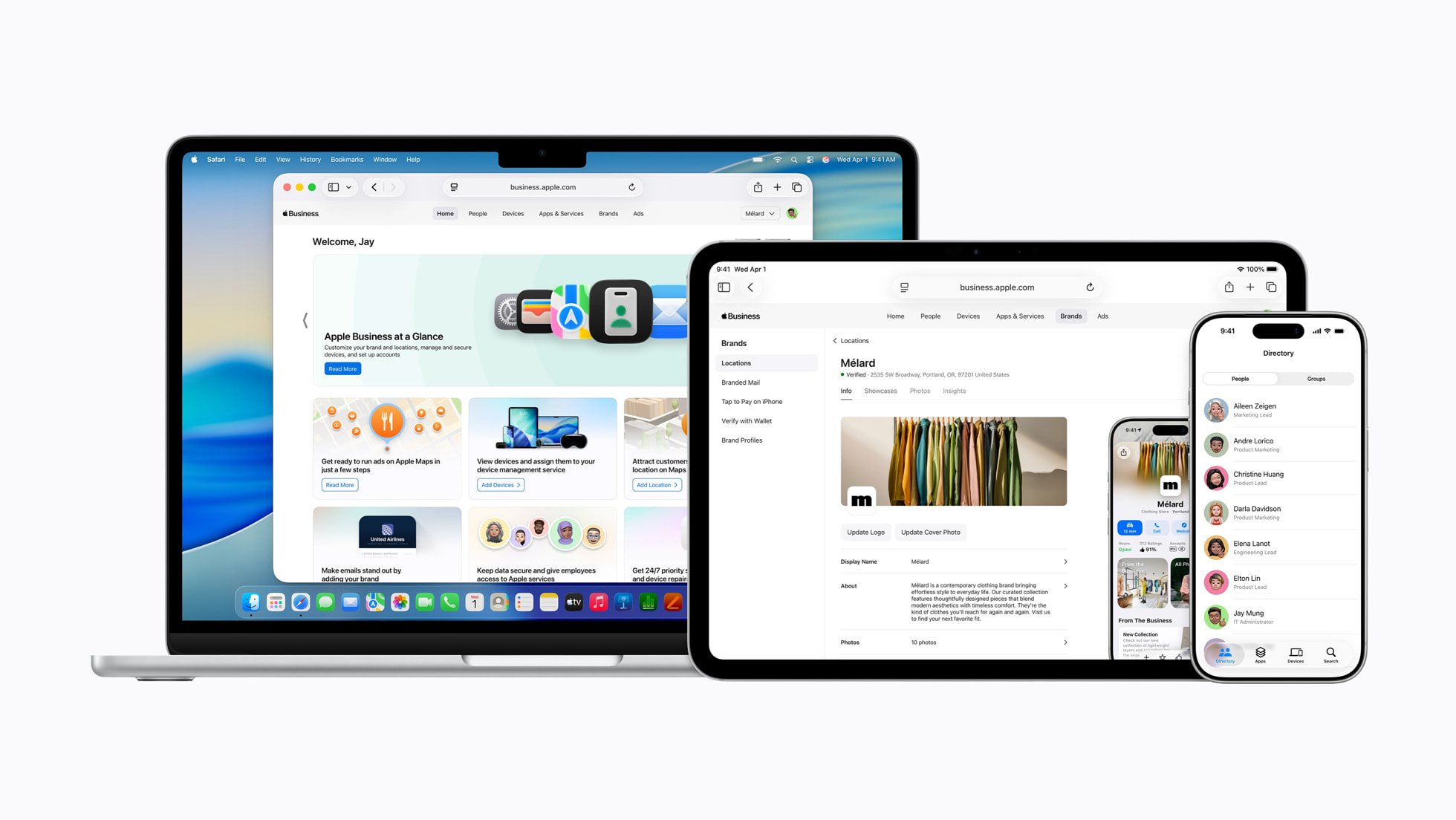
This is part of a broader system called Apple Business, which will be available across more than 200 markets and connects various Apple services, including Maps, Mail, Wallet and Siri. In doing so, Apple is not just introducing a new ad format, but creating an integrated structure in which brand presence extends across multiple touchpoints within the user experience.
Although Apple has long kept its distance from advertising as a business model, the growth of its services segment clearly signals a shift in priorities. In the first quarter of fiscal 2026, this segment reached $30 billion, with double-digit year-over-year growth, while advertising revenue hit an all-time high.
In that context, introducing ads in Maps does not appear as an isolated move, but rather as a logical continuation of a broader strategy to monetize its existing user base. With around 1.6 billion iPhone users globally, Apple operates one of the most valuable and engaged mobile environments, which until now has not been fully leveraged for advertising.
Unlike traditional digital formats, ads within Maps enter a context where users already have a clear intent, whether they are searching for a restaurant, a store or a specific location. This shifts advertising from the stage of inspiration to the stage of decision, where its potential value for brands is significantly higher.
To use this option, businesses will need to verify and manage their locations within Maps, after which they will gain access to an automated campaign creation system. Existing users of the Apple Ads platform will also be able to extend their activities to Maps, with additional customization options.
At the same time, the Suggested Places feature introduces a layer of recommendation within navigation itself, opening up space for subtle yet relevant brand positioning without disrupting the user experience.
Apple continues to emphasize its privacy-first approach. Ads will not be linked to individual Apple accounts, and location or behavioral data will not be used for personal targeting or shared with third parties.
This model represents a clear contrast to dominant advertising platforms, but also a potential limitation in terms of targeting precision. It is precisely within this tension between privacy and performance that one of the key questions for advertisers emerges: how far can contextual relevance go without deep personalized targeting?
Ads within Maps are not a new category on the market. Google has been monetizing its own maps platform for years, generating significant revenue. Apple’s entry into this space therefore represents direct competitive positioning, but with a different strategic emphasis, less on the volume of data, and more on control and privacy.
At the same time, the relationship between these two tech giants remains complex. A recent collaboration integrating Google’s Gemini model into Apple Intelligence shows that competition and partnership are increasingly happening in parallel, depending on the layer of technology.

