

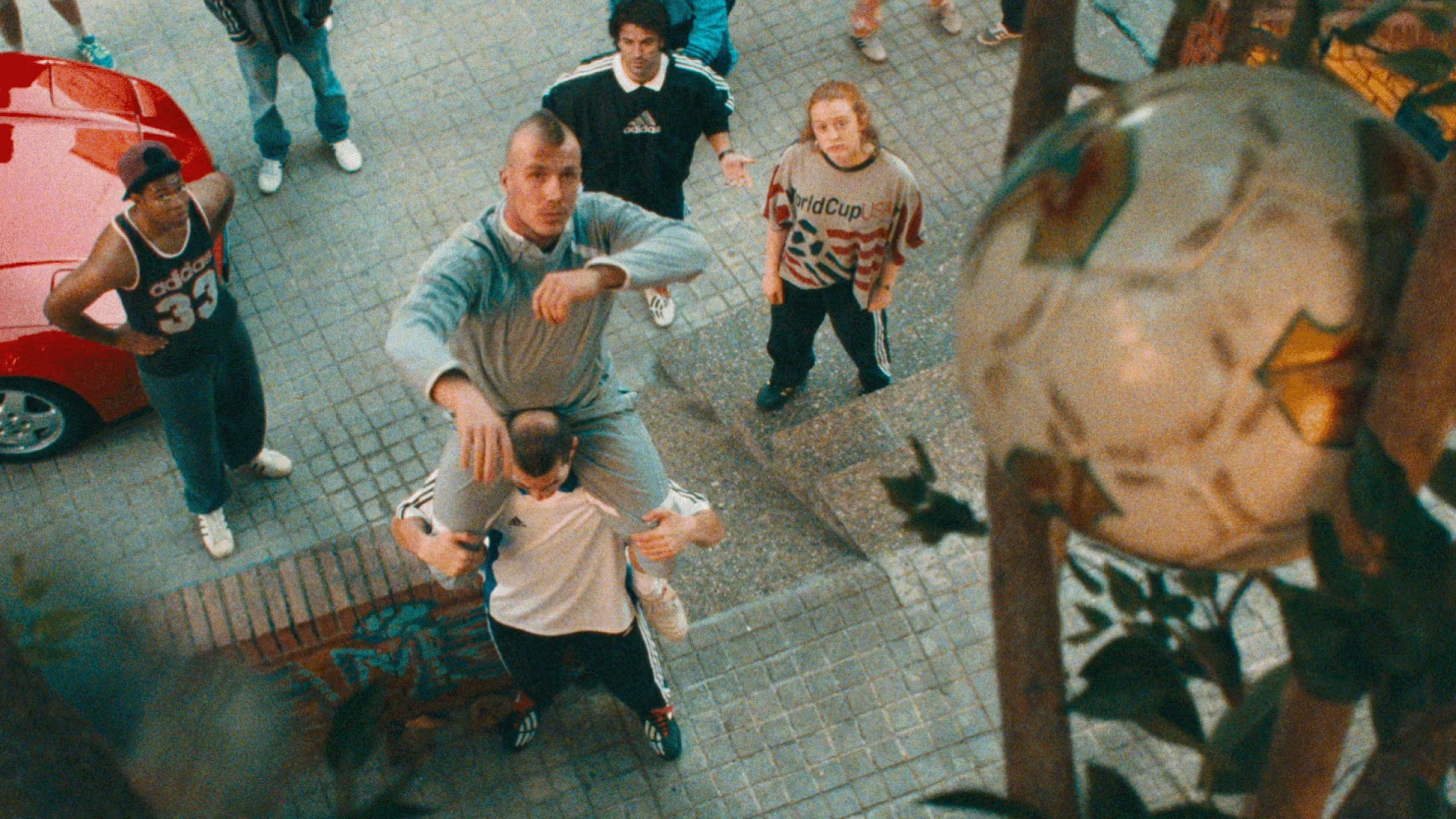
While sports marketing in recent years has increasingly relied on data, performance and hyper-produced stories about winners, Adidas chooses a completely different emotional framework in its new global campaign. Instead of focusing on trophies, statistics and the pressure of major competitions, the “Backyard Legends” campaign attempts to remind audiences why most people fell in love with football in the first place.
At the center of the five-minute film is the idea that the greatest football stories are often not born in stadiums, but on improvised pitches between apartment buildings, in parking lots, fenced neighborhood courts and places where the result was never more important than the game itself.
The campaign was created by agency Lola USA, while the film was directed by Mark Molloy from production company Smuggler. The visual identity heavily draws from the aesthetics of 1990s football culture, from analogue technology and retro styling to the atmosphere of street football that shaped global football culture for generations.
The lead role in the film belongs to Timothée Chalamet, who plays a football obsessive trying to assemble a team capable of defeating a mysterious local trio that has ruled the neighborhood pitch for decades. The story also features some of the biggest football stars of today and previous generations, including Lionel Messi, Lamine Yamal, Jude Bellingham, Trinity Rodman, David Beckham, Zinedine Zidane and Alessandro Del Piero, while cameo appearances include Bad Bunny, Ousmane Dembélé, Pedri, Raphinha, Florian Wirtz and Santiago Gimenez.
A particularly interesting part of the campaign is the way Adidas attempts to merge nostalgia with contemporary pop culture. The film uses CGI and visual effects to allow younger versions of Beckham, Zidane and Del Piero to once again become part of the same football mythology now continued by a new generation of players.
The campaign simultaneously represents one of the biggest commercial collaborations in Timothée Chalamet’s career so far, further reinforcing Adidas’ strategy of connecting football with the broader worlds of culture and entertainment. In this way, the World Cup is no longer trying to communicate only with sports audiences, but also with a generation that experiences football as part of identity, music, fashion and digital culture.
The new campaign also continues the broader “You Got This” platform, through which Adidas has in recent years attempted to portray sport less through the pressure of results and more through confidence, freedom and individual expression. The campaign arrives at a moment when Adidas is intensifying preparations for the FIFA World Cup 2026, where the company will serve as an official tournament partner and official match ball provider, while additional activations will roll out across host cities in the United States, Canada and Mexico in the coming weeks.

