

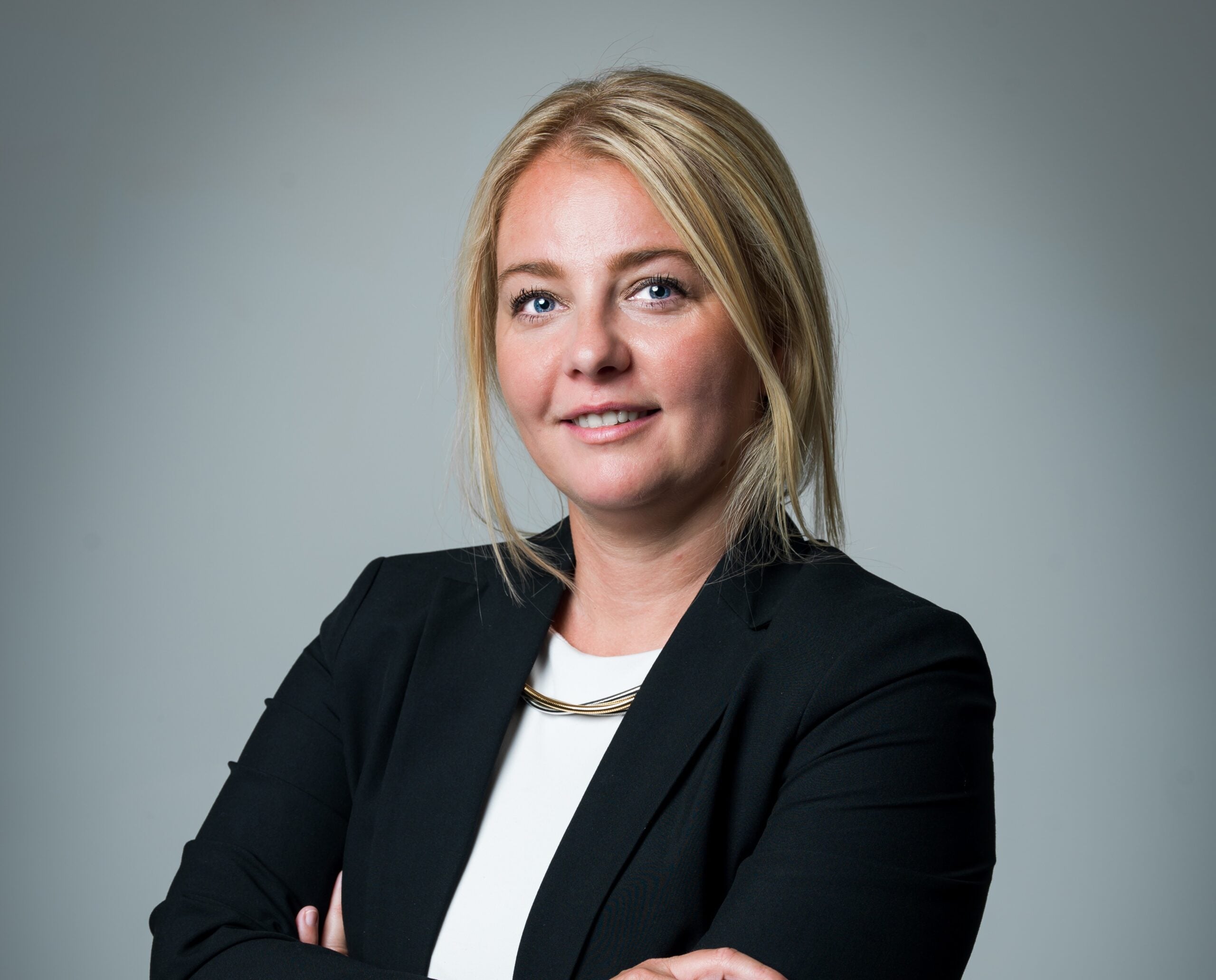
Corporate social responsibility, the media’s approach to stories of public interest, and the growing challenges brought by artificial intelligence are among the topics raising important questions for the communications profession today. Naida Alić Kuduz, who has eighteen years of experience in communications and public relations, discusses these issues from the perspective of a professional who has worked in the non-profit and corporate sectors, as well as with international organisations.
For the past ten years, she has been working at UniCredit Bank on strengthening brand reputation, developing socially responsible projects, media relations, and internal communications. Her previous experience includes working with non-profit organisations, regional cooperation, and the development and implementation of projects supported by organisations such as UNICEF, the Jolie-Pitt Foundation, the UniCredit Foundation, and the World Bank. Working across different sectors has enabled her to view social responsibility beyond individual projects and communication campaigns.
On the occasion of receiving the PRO PR Globe People Achievement Awards recognition, she speaks to Media Marketing about why social responsibility must begin within the company itself, where PR ends and paid media space begins, and how prepared citizens are to recognise digital fraud and disinformation. We also discussed artificial intelligence, which can make the work of communications professionals easier but cannot take responsibility for what they communicate.
Social responsibility has become one of the imperatives of positioning. What is important to know if you want to be a socially responsible company today?
The most important thing is to understand that social responsibility cannot be just a project or a positioning tool. If it is not driven by a sincere intention to contribute to the community, it is very quickly recognised as something done for reputation rather than out of a genuine desire to make a positive change. Social responsibility must be an integral part of a company’s culture, business strategy, and the way it operates every day.
Today, the public, and especially younger generations, assess much more carefully how consistent organisations are between what they say and what they actually do.
I believe that a socially responsible company must understand its impact on the community and recognise where it can make the greatest contribution, because the true value of social responsibility is not measured by the number of projects implemented, but by their long-term impact on the community.
Over the past decade or so, media relations have turned into a paid narrative. To what extent do the media in Bosnia and Herzegovina understand that there are news stories and information that should not have to be paid for, particularly those related to positive stories and initiatives, or does such content also have to be paid for?
This is one of the more important questions for the future of the communications and media industry.
I fully understand the challenges the media face, and I am aware that business sustainability is much more complex and challenging than it used to be. At the same time, positive stories often do not generate the same level of audience interest as sensationalist content. That is why it is important that information shared by a company is not exclusively and always viewed as an advertising message. There are initiatives, projects, and stories that have genuine social value and deserve media attention precisely because of the benefits they bring to the community.
PR should not be equated with purchasing media space. Its essence is to understand the needs of the public and offer content that has genuine informational value. Of course, the media are not obliged to publish every press release they receive, but I believe it is in the interest of society as a whole to have space for quality, positive stories that have real value. In everyday work, it is a genuine pleasure to collaborate with media outlets and editors who have developed an awareness of and sensitivity to socially important topics, because in this way we all contribute to ensuring that these topics receive the space they deserve. In the long term, it is in the interest of both the media and companies to build a relationship in which there is a clear recognition and acceptance of the distinction between what deserves editorial attention and what constitutes advertising.
Because of artificial intelligence, we are facing a large amount of fake news, while in the banking sector we are also witnessing numerous cases of theft caused by disinformation. In your opinion, what are the key risks we need to be aware of today as users of various services?
Artificial intelligence has brought numerous advantages, but at the same time, it has enabled the creation of false content much faster and more convincingly. Today, it is no longer enough to believe only what we see or read; it is necessary to verify and seek additional confirmation. That is why we must develop the habit of checking information, paying attention to sources, and being cautious when sharing personal or financial data.
Awareness of the existence of different forms of fraud must be present at all times. That is why continuous warnings, educational messages, and campaigns are indispensable. In today’s digital age, media, digital, and financial literacy are becoming essential life skills.
It is increasingly common for even educated people who are familiar with different types of fraud and have a developed awareness of the risks to fall victim to scams. All it takes is a moment of inattention, being in a hurry, or a simple coincidence with a current life situation. That is why, alongside education, it is crucial to be aware that we must protect personal and financial data just as carefully as the key to our own home or our wallet. We do not give it to just anyone or leave it unattended, and we should treat our data in the same way, especially in the digital space.
Trust is one of the most important values in digital society, and we will all share equal responsibility for preserving it.
Are artificial intelligence tools permitted in your work? If so, to what extent and in what way? What do you think about artificial intelligence and its role in the work of public relations professionals?
I think it would be wrong to ignore technology that is already changing the way we work, communicate, and make decisions. Artificial intelligence has become part of our professional reality, and I believe that its application in communications, as in all other industries, is entirely natural. However, the much more important question is how we will use it.
In everyday work, AI can be an extremely useful tool for research, analysis, monitoring trends and publications, structuring information, and developing initial ideas. At the same time, it helps us make certain processes faster and more efficient.
Nevertheless, AI should be applied and used thoughtfully, as support for communications professionals rather than as their replacement.
Because communication is not just about putting words together in a sentence; it is primarily a human characteristic and involves understanding people, emotions, and social circumstances. That is why AI should only be a tool in human hands. It can suggest a perfectly constructed sentence, but it cannot know whether that sentence will be appropriate at a particular moment, how the public will perceive it, or what consequences it may produce.
This brings us to the fundamental value and role of the human being as a communicator. Technology helps us become more efficient, but depth of thought, responsibility, creativity, and authenticity still bear the human touch.
What does the PRO PR Globe People Achievement Awards recognition mean to you?
The communications industry has changed more over the past twenty years or so than we could have imagined, and I had the opportunity to begin my career at a time when public relations were primarily associated with traditional media and communication channels.
My professional journey has certainly not been monotonous, as I have constantly learned, adapted, and developed. That is why I see this recognition as an acknowledgement of a professional journey, but also as an expression of gratitude to all the people with whom I have had the opportunity to work, learn, create, and implement various projects.
I am particularly pleased to receive this recognition at a time of great and rapid change. And it certainly gives me additional motivation to remain curious, question established practices, learn, and consistently uphold the values of our profession.
If you were not doing this job, what would you be doing?
I would still be working with people and ideas.
I have always been drawn to different cultures, art, and the ways people express themselves and their times through creativity. I am particularly fascinated by how works of art, whether created today or several hundred years ago, can still inspire, evoke emotions, and raise new questions. So I would probably build my professional path somewhere between creativity, culture, and social impact. I would enjoy exploring the world on a motorcycle, visiting new and unpopular destinations, meeting people, and creating new experiences.
I believe that the essence of a life’s calling lies in the way we view the world, connect with people, and nurture relationships, while at the same time creating a better environment for a fulfilling life.

