

The boundaries between public relations, marketing and digital technologies are becoming increasingly blurred, while artificial intelligence is raising new questions about the future of the communications profession. In the telecommunications industry, which faces technological challenges, crisis situations and growing customer expectations on a daily basis, communication has become just as important as the infrastructure itself.
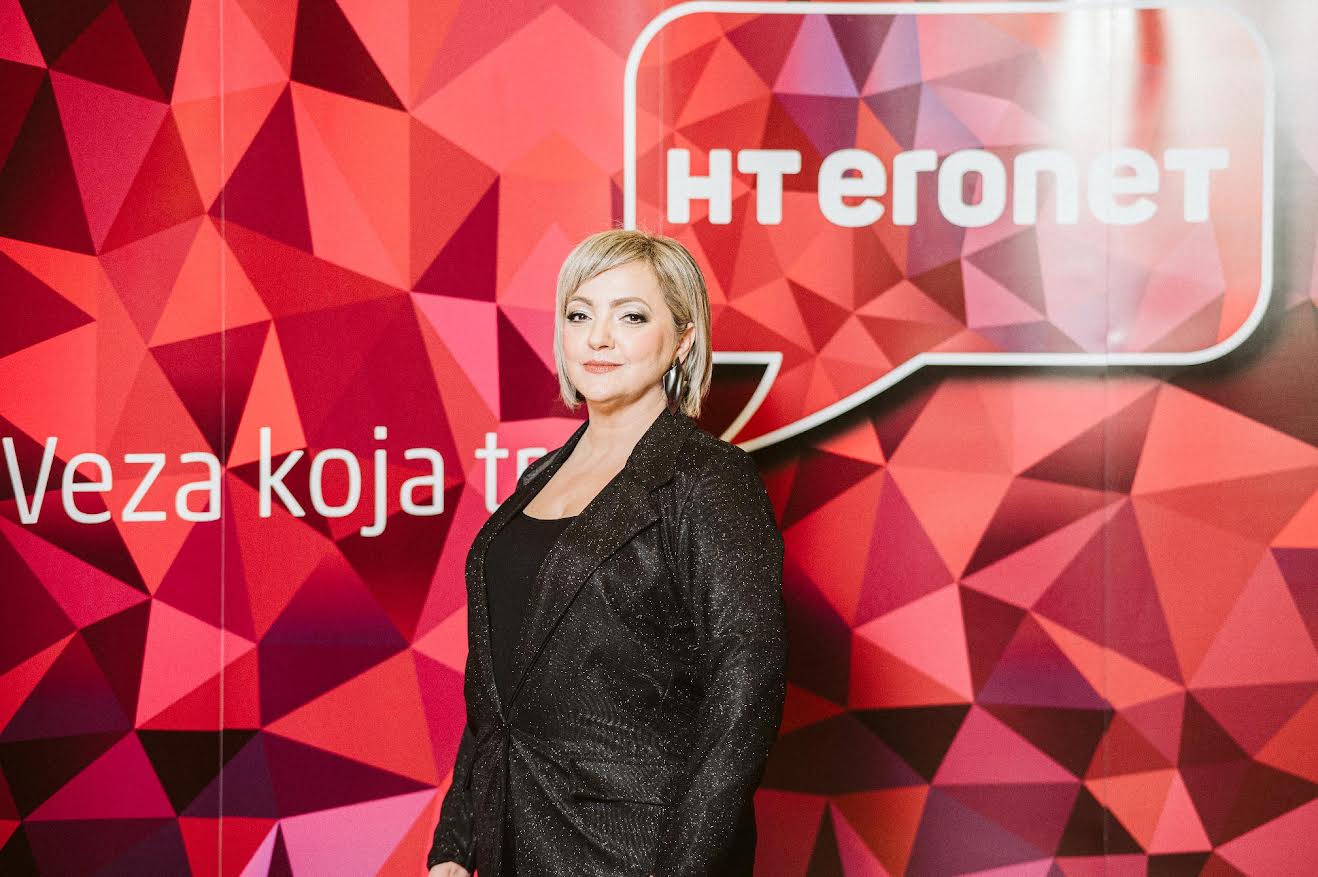
The following interview is with Misijana Brkić-Milinković, Head of Corporate Communications at HT Eronet, who has led the company’s communication activities for the past ten years. Before joining HT Eronet, she built a distinguished journalism career, working for numerous media outlets in Bosnia and Herzegovina and Croatia, while her professional path has also been shaped by her work in culture, publishing and academia. She has received a number of professional recognitions, including the international PRO PR Globe Awards, and is currently pursuing a doctoral degree in Communication Sciences at the University of Mostar.
In this interview, she discusses whether artificial intelligence can replace public relations professionals, the most common crisis situations in the telecommunications industry, where she sees the boundary between PR and marketing, and the skills that communication professionals need today. She also explains why she believes empathy, experience and an understanding of people are values that no technology can fully replicate.
We are witnessing significant changes in the field of public relations. Do you believe artificial intelligence will replace public relations?
Artificial intelligence has become a topic that is discussed daily, with its application being analysed across all areas of life. Therefore, it is not surprising that more and more people are talking about it replacing public relations as well. Personally, however, I believe that it can never completely replace people in PR, although it can change the way public relations functions in practice.
For example, artificial intelligence can help process large amounts of data, prioritise information, analyse public opinion and search online sources, but it cannot help shape PR that relies on community relationships, emotions, intuition, knowledge and experience – everything that only people can truly understand, shape and respond to according to a specific situation and circumstances. It cannot understand the social context within which PR professionals make decisions, nor can it, in my opinion, fully replace the human mind in developing campaigns, projects and ideas.
Therefore, I am not an advocate of artificial intelligence replacing people in public relations, but I do support its use as a supporting tool. It may provide a hint, guide us in developing an idea from concept to execution, or suggest a press release or media statement. Even then, however, I believe moderation is necessary. A combination of artificial intelligence and human knowledge, experience, intuition and critical thinking is, in my view, the winning formula for the future of public relations.
What are the most common crises you encounter in the telecommunications industry?
The telecommunications industry today faces a wide range of crises, including technological and cyber crises, market-related crises, environmental crises and reputational challenges.
The most common crises we face are technical failures at base stations or within the core network, which can cause service interruptions. There are also disruptions in data centres, for example due to hardware failures or fires, which may lead to service delivery issues. Various cyberattacks, such as ransomware attacks or customer data theft, can also paralyse an entire system.
Since the telecommunications market is now saturated with numerous operators, one of the most frequent challenges is customer loss, as well as declining revenues from traditional services such as SMS and voice calls due to the growing popularity of digital platforms such as Viber, WhatsApp and similar services.
Crises caused by extreme weather conditions are also common, as they can damage infrastructure and lead to communication outages. A few years ago, during the coronavirus pandemic, there were also supply chain issues affecting the delivery of equipment and devices from countries such as China.
What I would particularly highlight is the crisis that arises from poor communication with dissatisfied customers, for example during technical difficulties. Such situations can significantly damage a company’s image and brand reputation. This is precisely where the value of PR expertise and communication skills becomes evident.
What skills should a person working in public relations possess today?
A person working in public relations today should possess a combination of communication and technical skills.
In addition to strong writing, speaking and public presentation skills, I believe it is essential to know how to listen, understand the needs of different audiences and communicate those needs effectively. Maintaining good relationships with the media is extremely important, as is responding to media inquiries in a timely manner, even if the answer is simply that there is no comment.
Information and digital literacy are also necessary. Furthermore, PR professionals should understand and effectively apply communication strategies, manage crises successfully and react quickly and calmly under pressure.
Analytical skills are important, but so are personal qualities such as empathy, ethical conduct and negotiation abilities. I would say emotional and social intelligence are equally important.
What I would personally recommend to colleagues working in communications is to maintain a smile, remain calm and always use kind words. Even when the other side does not respond in the same way, stay consistent and true to yourself.
Where do public relations end and where does marketing begin?
Public relations are about building trust, reputation and long-term relationships, while marketing begins where the market dictates needs and attitudes.
Public relations build trust, establish positive relationships with target audiences and contribute to an organisation’s position and reputation. In PR, we strive to be recognised as a socially responsible organisation and to build relationships over the long term. Nothing happens overnight.
Marketing, on the other hand, is focused on a specific objective, product or service and aims to influence demand. In other words, it is focused on profit and market competition.
I believe that strong and successful public relations have a significant impact on marketing and on overall business performance. If the public recognises us as reliable, responsible, committed to keeping our promises, attentive to the needs of the community and actively involved in solving issues where our contribution is expected, then the marketing effect will naturally be stronger.
When the media report positively about us, when the public believes what we say and trusts our brand, and when a company’s reputation is successfully protected during a crisis, public relations deserve much of the credit. We create the story and ensure it reaches the public in the right way, without directly encouraging people to purchase a specific product or service.
From a communication perspective, public relations are always based on two-way communication and dialogue with the public, while marketing is often a one-way form of communication focused on informing consumers.
One could therefore say that PR ends with building reputation and trust, while marketing begins where that reputation is transformed into sales and profit. Although public relations and marketing are distinct disciplines, they often work closely together and overlap within integrated communications.
If you were not doing this job, what would you be doing and which professional path would you choose?
As a little girl, I dreamed of becoming an actress. Later, after graduating, I could only imagine myself in journalism. I spent many years working as a journalist across all types of media, although television has always been my favourite.
The knowledge and experience I gained in journalism proved extremely valuable later in my PR career. If I had to choose again, I would once again choose journalism or public relations. Today, I cannot separate the two. I love both equally.
What I would still like to do is complement my professional path by working with young people at a university. This is one of the reasons I chose to continue my education through an interdisciplinary doctoral programme in communication sciences, as I can see myself in that role as well.
At the same time, this does not exclude another long-standing ambition of mine – starting my own agency. So far, I have managed to make my wishes come true.

