

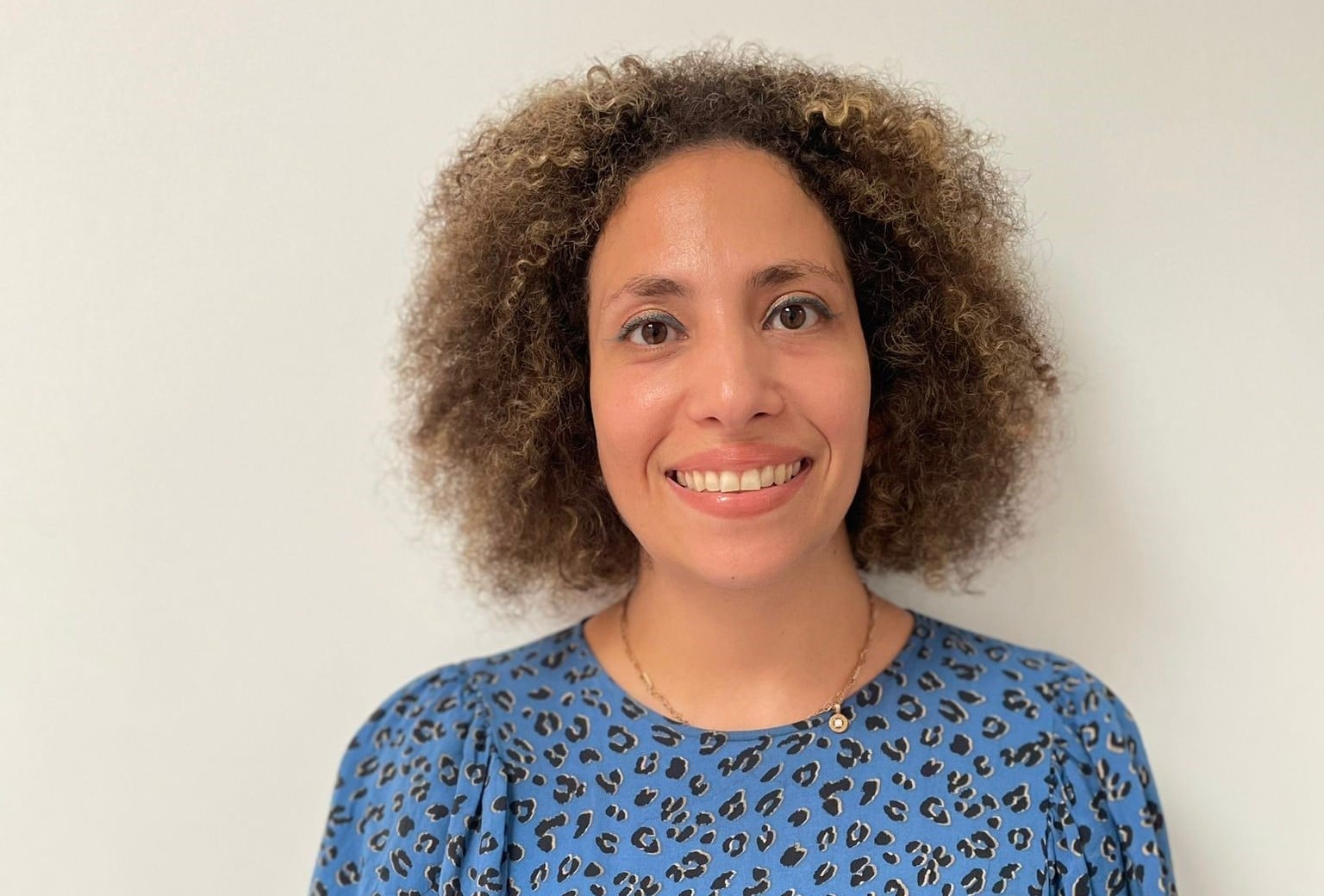
For many people in public relations, drafting a press release, monitoring media coverage and compiling contact lists were among their first tasks. These are precisely the tasks AI is increasingly taking on. Souha Khairallah believes this raises a question for leaders about how they will give junior colleagues the opportunity to gain experience and develop their own judgement if the way people learn the job changes.
Khairallah is Talent and Professional Development Director at the Public Relations and Communications Association (PRCA), the world’s largest professional PR body. She leads programmes for PR and communications professionals, ranging from classroom courses, webinars and training tailored to individual teams to professional qualification programmes and the PRCA Leadership Academy. She also consults for Polpeo, a crisis communications company, where she contributes to training and exercises that simulate crisis situations for clients.
In her own work, Khairallah uses AI to identify skills gaps in feedback from thousands of delegates. When PRCA members said they already had access to the tools but still lacked confidence in using them, the association launched training in Microsoft Copilot. We also discussed how to judge when to trust the output of these tools, who decides what to say and when in a crisis, and why Khairallah expects advising leaders to become a growing part of the job in public relations.
Artificial intelligence is increasingly influencing talent acquisition and recruitment processes. To what extent do you use AI in your current role, particularly in identifying, attracting and developing talent?
I use AI every day, but as an assistant rather than a decision-maker. My role is more focused on professional development than recruitment, so I use it mainly to analyse what our members and clients are asking for, spot skills gaps across the industry, draft and refine course outlines, and turn feedback from thousands of delegates into themes we can act on. It gives me more time for the part of the job that matters most, which is supporting people to find the right course and giving advice on what will help them the most.
We have also built AI into what we teach. At the PRCA, we recently launched Microsoft Copilot training, available both as an open course and as bespoke programmes for agencies and in-house teams, because our members told us they had access to the tools but not always the confidence to use them well.
For me, developing talent today means helping people use AI responsibly and productively. It does not mean handing judgement over to it. When it comes to choosing trainers, shaping a leadership programme or deciding what people need next, human judgement remains essential.
Do you believe that the next generation of PR professionals will need to be proficient in AI tools in order to remain competitive in the job market? Do you think that today’s management teams and companies sufficiently understand the importance of the human role in an increasingly AI-driven environment?
Yes. AI proficiency is quickly becoming a baseline expectation, in the same way that digital and social media skills did a decade ago. A graduate who cannot use AI to support research, drafting and analysis will be at a disadvantage.
But proficiency alone will not set anyone apart. What will matter is knowing when not to trust the output, how to check it, and how to add the insight, context and ethics that a machine cannot.
I think understanding among management teams is still uneven. Many leaders see AI mainly as a route to greater efficiency and lower costs. The more thoughtful ones recognise that it actually increases the value of human skills: judgement, relationships, creativity and accountability.
One of the biggest risks is that organisations remove the junior tasks through which people traditionally learned their craft without replacing that learning in another way. Leaders need to think carefully about how they will develop the next generation of senior advisers if AI is doing more of the groundwork. AI can support judgement and critical thinking, but it cannot replace them.
What advice would you give to PR professionals when it comes to developing the skills and competencies they will need in the future? Which competencies should they prioritise, and how should they balance technological knowledge with human skills?
Stay curious and treat learning as continuous, not as something you finish early in your career. We provide a CPD platform for our members which allows them to log what they have done and, importantly, reflect on what they have learned.
I would prioritise three areas.
The first is strategic and critical thinking: understanding the business, asking the right questions and challenging assumptions, including the ones AI produces.
The second is the human skills that build trust, such as listening, empathy, influencing, ethical judgement and staying calm under pressure. Crisis communications shows this clearly. Technology can help us move faster, but it is still people who decide what to say, when to say it and how it will land.
The third is practical digital fluency: being comfortable experimenting with AI tools, understanding their limits, and knowing the risks around data, accuracy and reputation.
The balance I would recommend is to learn the technology well enough to direct it, then invest just as much in the human skills that make you worth listening to. Formal training, qualifications, mentoring, peer learning and practice in real situations all have a role to play.
How do you see the PR profession evolving in the coming years? Do you believe AI will fundamentally transform the profession or could it eventually replace certain roles within it?
AI will transform how we work, and some tasks will change significantly: first drafts, routine monitoring, basic reporting and media lists. Roles built entirely around those tasks will evolve or shrink. That is a real challenge, and as a profession we should be honest about it.
But I do not believe AI will replace public relations, because PR is fundamentally about trust, reputation and relationships. Those are human outcomes, and they depend on human accountability.
As AI-generated content floods every channel, and misinformation and deepfakes become easier to create, organisations will need skilled communicators more than ever to protect their credibility and communicate clearly and persuasively.
I expect the profession to become more strategic and advisory, with practitioners spending less time producing content and more time counselling leaders. Ethics, governance and measurement will become more important, and the line between communications and wider business strategy will continue to fade.
The professionals who do well will be those who embrace AI as a powerful tool while staying firmly human in their judgement, values and relationships.
If you were not working in public relations and professional development, what career path would you have chosen?
I actually started my career in events, including planning weddings, and I loved it. So if I were not working in PR and professional development, I could easily see myself going back into events or moving into career coaching.
I’ve always really enjoyed building client relationships, getting to know people and understanding what they genuinely need. Whether that is helping someone shape their career, planning the perfect event or organising a brilliant holiday, I love bringing all the pieces together and making the experience feel personal.
For me, whatever the role, it would probably still come back to people, relationships and creating something that is genuinely right for them.

