

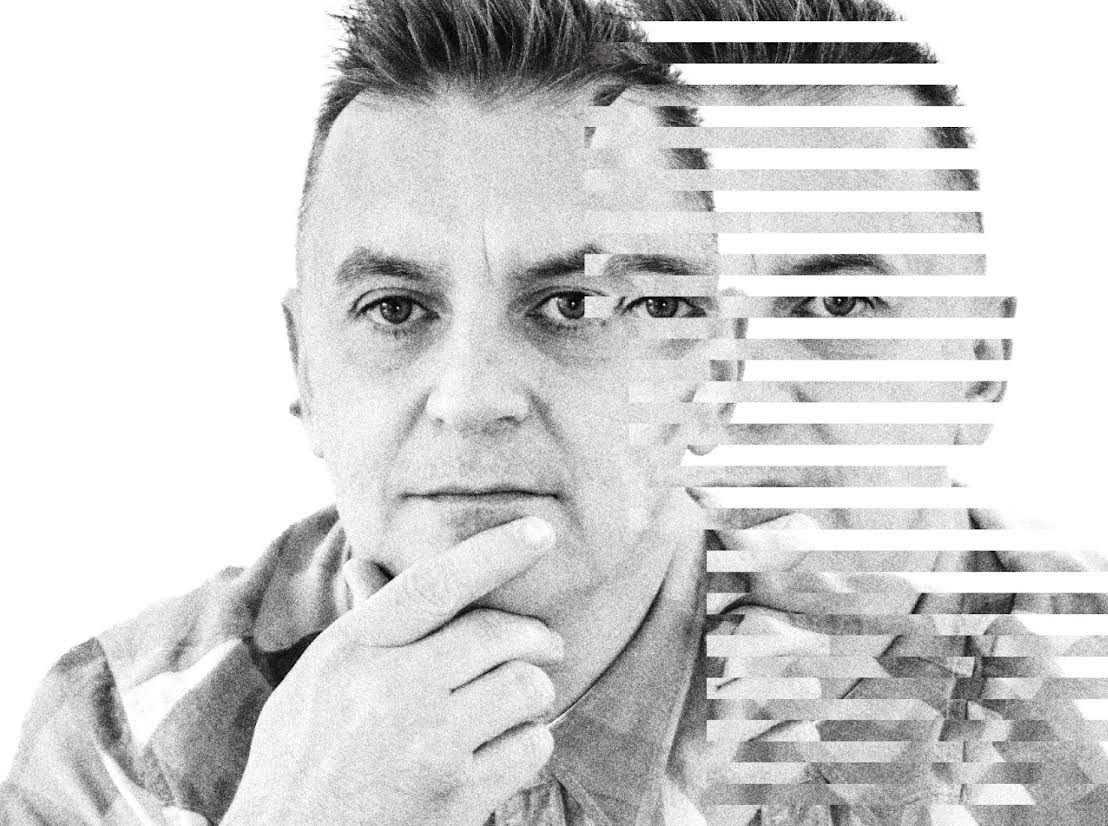
In a series of conversations with members of the Dani komunikacija festival board, we also return to its beginnings – not through nostalgia, but through the perspective of those who shaped it from within. Damir Ciglar, one of the initiators of the festival and one of the key figures in its evolution, today represents a kind of “historical memory” of the board: a voice that remembers why it all started, but also one that does not allow the festival to become trapped in its own success.
At a moment when Dani komunikacija is entering a new phase of development, and the industry is rapidly being redefined under the influence of technology, AI, and changes in content consumption, Ciglar speaks from a position of continuity – but without the need to protect it. His perspective opens questions about how a festival remains relevant in a world where audiences already “have everything in their pocket,” why the fight against routine is more important than preserving tradition, and whether an industry event can be more interesting than the internet.
The conversation with Damir Ciglar is not about the festival’s past, but about its ability to constantly question its own format, as well as the industry it belongs to.
What about what you envisioned when you were launching DK looks completely different today from what you thought it would be at the time, and is that surprise a pleasant one?
When we were launching DK, we were asking how to bring in big names. Today, we are asking how to surprise an audience that has already seen everything. Although the name of the festival is still Dani komunikacija, I would say it is increasingly becoming a festival of curiosity for an audience that does not have the privilege of stopping being curious. And that is what pushes the festival to keep growing: an audience that has become more selective, smarter, and more demanding.
The surprise may be pleasant, but fulfilling those expectations is certainly demanding.
Which risk that the board has taken in the last five years was not obvious at the time of the decision, and what convinced you it was the right move?
Every new edition of the festival brings new risks, and the decision to take on a particular risk is made as a board, not as an individual. That means we are generally aware not only of the risks, but also of the consequences. However, it seems to me that the risk we took unconsciously is that we want the festival to be more attractive and more interesting than the internet. The audience today carries TikTok, YouTube, AI, and every TED Talk ever recorded in their pocket.
If someone decides to come to Rovinj, it means we have to give them something they cannot get by scrolling; not necessarily just answers you can google, but questions you need to ask yourself.
Is it wrong to say that the initiator of a festival over time becomes its guardian, rather than its innovator?
That is a very good observation and question, and it is a very real danger for any festival. If the initiator becomes a guardian of tradition, the festival can become a museum of itself – we have an example nearby that illustrates this well. Our job is actually the opposite: we try to change and improve our own format before the audience starts perceiving it as routine. If something at the festival looks the same two or three years in a row, we see that as a problem. The worst thing that can happen to a festival is to become predictable, because then it becomes its own biggest competitor. So we still primarily compete with and compare ourselves to our past editions.
A festival does not need guardians of tradition, but fighters against routine.
Is there a direction the board has never managed to implement, and what would need to be different for it to even be possible?
Honestly, there is no direction we wanted to implement but failed to. However, as with risks, I notice that one very potent direction has emerged (it can be seen this year in the choice of headline speakers, Jürgen Schmidhuber, as well as some panels) and that we are implementing it somewhat subconsciously, and I personally believe it holds great potential: interdisciplinarity, which in the case of such an important festival should be radical, beyond marketing.
The marketing industry sometimes talks too much to itself. And the most interesting ideas often come from science, technology, art, or unexpected industries in combination with marketing. To achieve radical interdisciplinarity, we would have to consciously risk that part of the audience says: “This has nothing to do with marketing.” I believe that in doing so we would learn more about ourselves, stop talking only to ourselves, and introduce interlocutors who can inspire us and push us in unexpected directions.
So not only to motivate the industry, but to shake it.
The festival you initiated is now entering its second decade. What is it that the festival knows about the industry that the industry does not yet know about itself?
By entering its second decade, DK has one advantage: a long enough memory to start seeing patterns that the industry, while rushing between deadlines and campaigns, often does not have time to notice. In recent years, it is clear that the communications industry is being redefined – from campaigns to trust, from reach to attention, from digital as a channel to AI as a business tool (so digital specialists are no longer a separate sect!). The festival simply creates a space where these changes can be seen a bit earlier. In other words, we have brought certain topics into focus before they became the “new normal.”
And Rovinj and the festival format are not just a backdrop. When you take the industry out of its daily rhythm for a few days and place it in a space where it is allowed to openly talk, question, and discuss, I believe you can see it from a new perspective.
Because the festival sees where the industry is going slightly before the industry sees it itself.

