

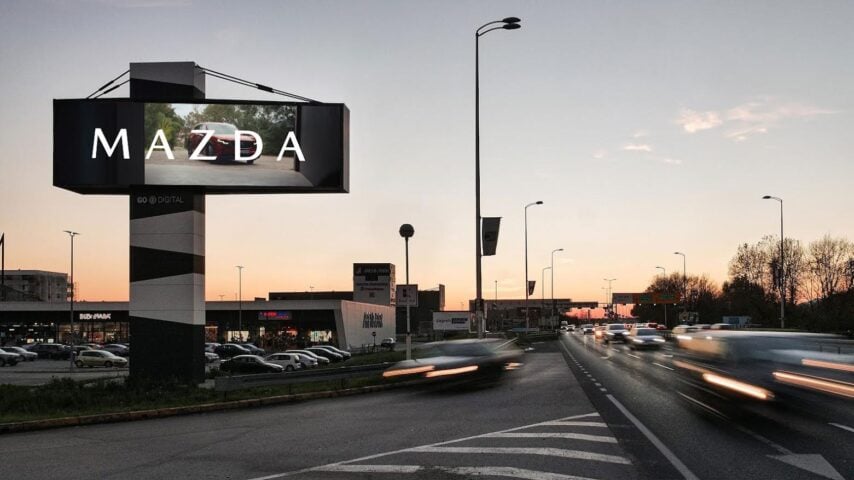
The campaign for the Mazda CX-5 ran from 31 August to 12 September. It aired four times a day on weekdays during the morning and afternoon rush hours. Every time Mazda’s spot started playing on bravo and Otvoreni radio, the same message appeared almost simultaneously on more than 100 Go2Digital screens in 40 Croatian cities. The idea came from WPP Media, while the technological solution was developed by Go2Digital in collaboration with amm creative.
We spoke about how the project came about, what proved most difficult and what the awards mean for the market with the key people who delivered it: Ivana Mudrovčić, Marketing Manager at Mazda, Daniel Štih, Chief Strategist at WPP Media Croatia, Dean Udatny, Director of Special Projects and Programmatic Operations at Go2Digital, as well as bravo and Otvoreni radio.
The idea and the challenge
Congratulations on your two SoMo Borac awards. Ms Mudrovčić, why did Mazda agree to be the first to try something that no one in the region had done before?
Ivana Mudrovčić (Mazda): Thank you, we are proud. The Mazda CX-5 is a car for people who enjoy driving and every part of the journey. That is why it made sense for us to reach them while they were on the road. Radio is the channel drivers listen to, while digital screens are what they drive past. When you bring them together, the communication accompanies drivers on their journey instead of interrupting them. As a brand, we like innovation, and here the risk was reasonable because we had partners we trusted.
Mr Štih, how did the idea of connecting radio and DOOH in real time come about at WPP Media?
Daniel Štih (WPP Media): We started by thinking about how to replicate television’s full audiovisual experience in other media. Radio lacks visuals, while DOOH lacks sound. The idea that naturally emerged was for each medium to give the other precisely what it was missing. Drivers hear the radio message and, almost at the same moment, can see the car they are hearing about on a DOOH screen. Research shows that the visual experience is one of the key factors when a customer is considering buying a vehicle, and this way we could show it at the exact moment their auditory attention was already on Mazda.
Was it difficult to convince the client that the two channels should no longer be separate in the media plan?
Daniel Štih (WPP Media): Less than you might expect, because from the outset Mazda was thinking about consumer behaviour from the initial idea through to purchase, rather than about channels. The harder part was demonstrating that the mechanism had sufficient reach. That is why we involved two radio stations, bravo and Otvoreni radio, and Go2Digital, as the leading DOOH network capable of making it happen. We extended the spot to a full minute, so exposure to the message lasted three to four times longer than in a standard format.
What was the biggest challenge for Go2Digital when you received this brief?
Dean Udatny (Go2Digital): The brief essentially said: the screen needs to know what is being broadcast on the radio right now. That did not exist as a ready-made product in our region. We had to develop a solution that would recognise when the spot was being broadcast and, without human intervention, launch the right content on selected screens within a few seconds. It also had to work reliably every time, throughout the two-week campaign and across around a hundred locations.
Technology and execution
Could you explain exactly what happened on the digital screens when Mazda’s spot started playing on the radio?
Dean Udatny (Go2Digital): The moment Mazda’s spot starts playing on one of the two radio stations, the radio system automatically sends our platform a signal in JSON format. For readers, we can describe it as a short digital message: “Mazda’s spot has just started. Launch the corresponding visual.” Our CMS, the content management system for the screens, receives that signal and almost instantly launches Mazda’s visual on selected roadside screens. Drivers can therefore see the message they hear on the radio almost simultaneously alongside the road. Everything is connected by a specially developed trigger protocol, which enables the radio spot and the screen display to be synchronised automatically, without manual control. The radio team developed their part of the technology, allowing them to send us the signal automatically.
bravo radio and Otvoreni radio: Radio was the trigger for the whole story in this campaign, so precision was crucial. We would certainly like to thank Mr Zoran Brebrić, who developed entirely new and innovative code within the radio sector across Europe. Based on the broadcasts we had fixed in the broadcast system, we used specially developed code to notify Go2Digital in real time when the broadcasts would take place, while providing an approximate broadcast time in advance. Together with WPP Media and Go2Digital, we coordinated the broadcast schedule and technical details: four times a day on weekdays during the morning and afternoon rush hours, while the extended one-minute spot gave listeners enough time to see the message as well.
How did you select the locations?
Dean Udatny (Go2Digital): Go2Digital has a network of 500 digital screens across Croatia, with more than three million impressions a day. For this campaign, we selected more than 100 locations in 40 cities, focusing on roadside locations where the audience is in the car listening to the radio. The campaign was active during the morning and afternoon rush hours on weekdays.
Ms Mudrovčić, what did the collaboration between the three parties look like from the client’s perspective?
Ivana Mudrovčić (Mazda): Everyone brought what they do best. WPP Media provided the idea and the plan, while Go2Digital and amm creative developed the technology and ensured the ad was broadcast and displayed. For us, it was important that the creative on the radio and on the screen spoke with the same voice, so that drivers experienced one story rather than two separate ads.
What about the creative: how do you make an ad that has to work both in the ear and on the screen?
Daniel Štih (WPP Media): The element of surprise was crucial. In a media market as static as Croatia’s, audiences do not expect to see the message they are hearing alongside the road, and that moment of recognition is what stays in their memory. A visual that is not a standalone ad, but a continuation of what is being heard: the same model, the same tone, the same moment.
Results, awards and what comes next
What results did you achieve?
Ivana Mudrovčić (Mazda): The campaign generated 155,000 impressions through DOOH, with 41 per cent of that reach achieved in synchronisation with radio. This means that approximately every second or third person who saw Mazda on a screen could also have heard the spot at the same moment. Beyond the numbers, the response from the industry and customers showed us that we had created something memorable.
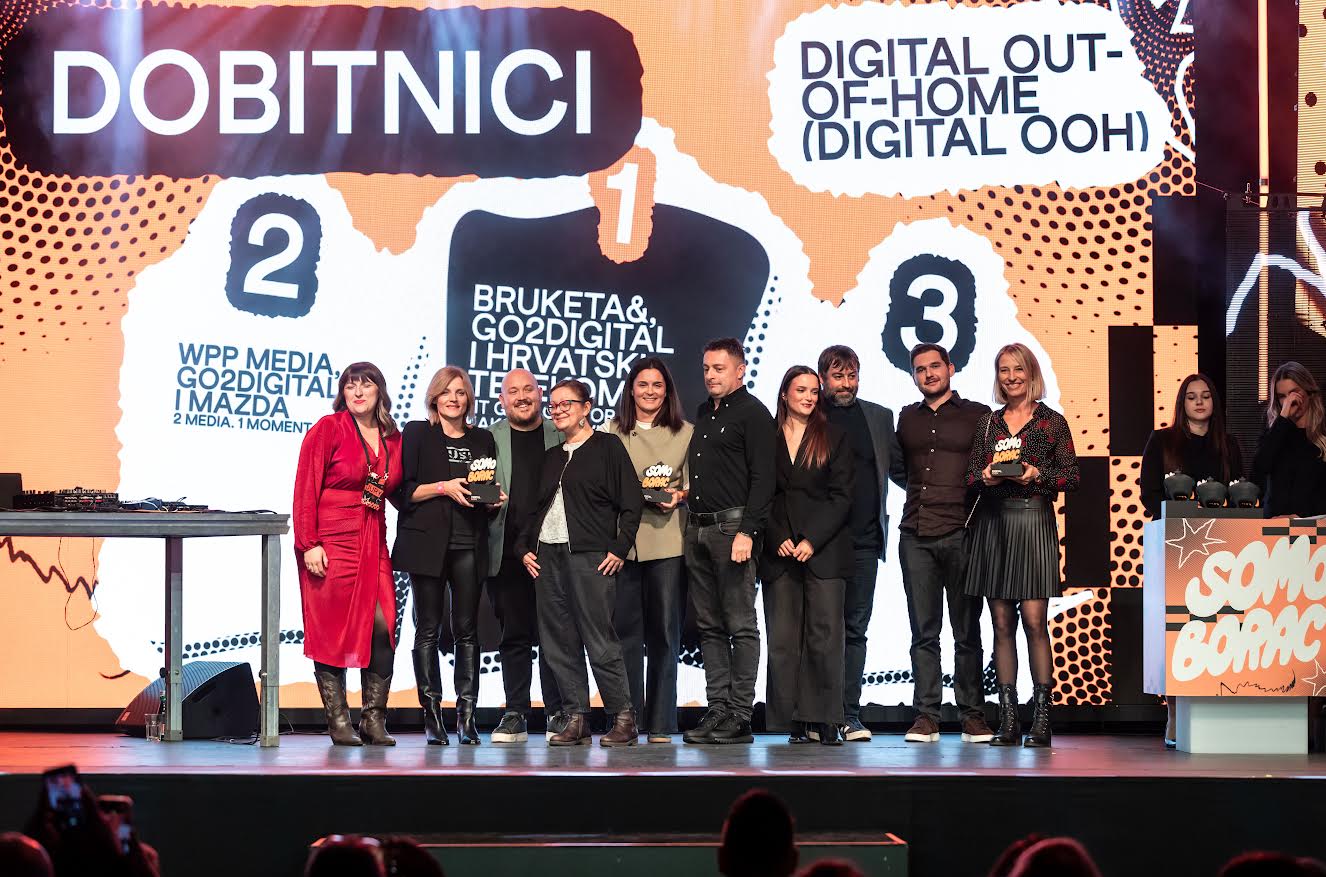
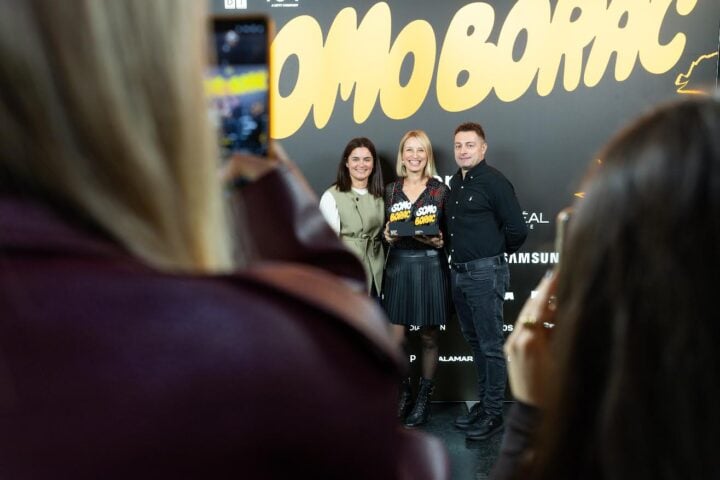
The project won first place in the SoMo Tech by BYD category and second place in the Digital Out-of-Home category. What do these awards mean to you?
Dean Udatny (Go2Digital): We are particularly pleased with first place in the SoMo Tech category because it validates what we have been investing in over recent years: that we can offer a technological solution and that we are more than screens in shopping centres or alongside roads. Digital screens are no longer the endpoint of a media plan, but a connected channel that responds in real time.
Daniel Štih (WPP Media): For the agency, this is proof that the best ideas often emerge at the intersection of channels, rather than within a single one. The award in the DOOH category shows that out-of-home advertising is also ready for this way of thinking.
Ivana Mudrovčić (Mazda): For us, the awards confirm that it pays to trust your partners and be the first to try something. It is also a message to other clients that innovation does not have to be out of reach.
What does this kind of synchronisation mean for radio as a medium?
bravo radio: It shows that radio is not just background to a drive, but a medium that can activate other channels. Our listeners are with us precisely when they are in their cars, and that is the moment advertisers most want to capture. When that moment is combined with a roadside image, the message gains the visual power that radio itself lacks. We believe we will be seeing these combinations increasingly often.
Otvoreni radio: For us, this is proof that radio can be a technology partner, rather than just a medium on which an ad is broadcast. Every broadcast of the spot became a signal that triggered content on another channel in real time, so this time radio orchestrated the entire campaign. This opens up new opportunities for advertisers: a radio spot no longer has to end when it falls silent, but can continue where the listener sees it. We are proud to be part of the project that was the first to demonstrate such a solution in the region.
Go2Digital returned from this year’s SoMo Borac with five awards from five nominations. What does that tell you?
Dean Udatny (Go2Digital): We won five awards with three projects, and our joint campaigns with partners took all three places in the Digital Out-of-Home category. This confirms that we are heading in the right direction: DOOH that does more than display messages, connecting brands and people through relevant and interactive experiences.
Can we expect similar campaigns for other clients soon?
Dean Udatny (Go2Digital): Absolutely. The solution we developed in collaboration with amm creative is now developed and tested, so we can offer it to other advertisers as well. We see plenty of scope for synchronising DOOH with other content in real time, from sports broadcasts to weather conditions.
Daniel Štih (WPP Media): Projects like these change the question we ask ourselves when planning. We no longer ask only where we will appear to “talk” to potential customers, but also how the channels will “talk” to one another.

