

A person carrying almost an entire wardrobe in Germany’s changeable weather could probably offer a reasonable explanation for every layer of clothing. The same applies to someone lugging full shopping bags all the way home. Viewed from the outside, however, these everyday habits begin to resemble unusual rituals worth capturing with a documentary camera.
That is precisely how Uber and Serviceplan present them in the oder aber Uber campaign, the first they have developed since the agency took over the brand’s account following a pitch completed last summer. Four films follow people who continue to choose a familiar but impractical way of getting around, even though a simpler solution is already available in the app.
One of the films draws on the German Zwiebellook, literally “onion look,” the habit of wearing several layers that can be removed and put back on throughout the day as the weather changes. The other films, titled City Trip, Shopping and The Club, find similar patterns in trips into the city, journeys home from the shops and nights out.
The narrator is German actor Axel Milberg. His restrained voice-over accompanies the films directed by Nick Ball and produced by Anorak Film. The camera stays close to real situations and their natural rhythm, without forcing the point, so the humour emerges from the contrast between the serious narration and entirely ordinary human decisions.
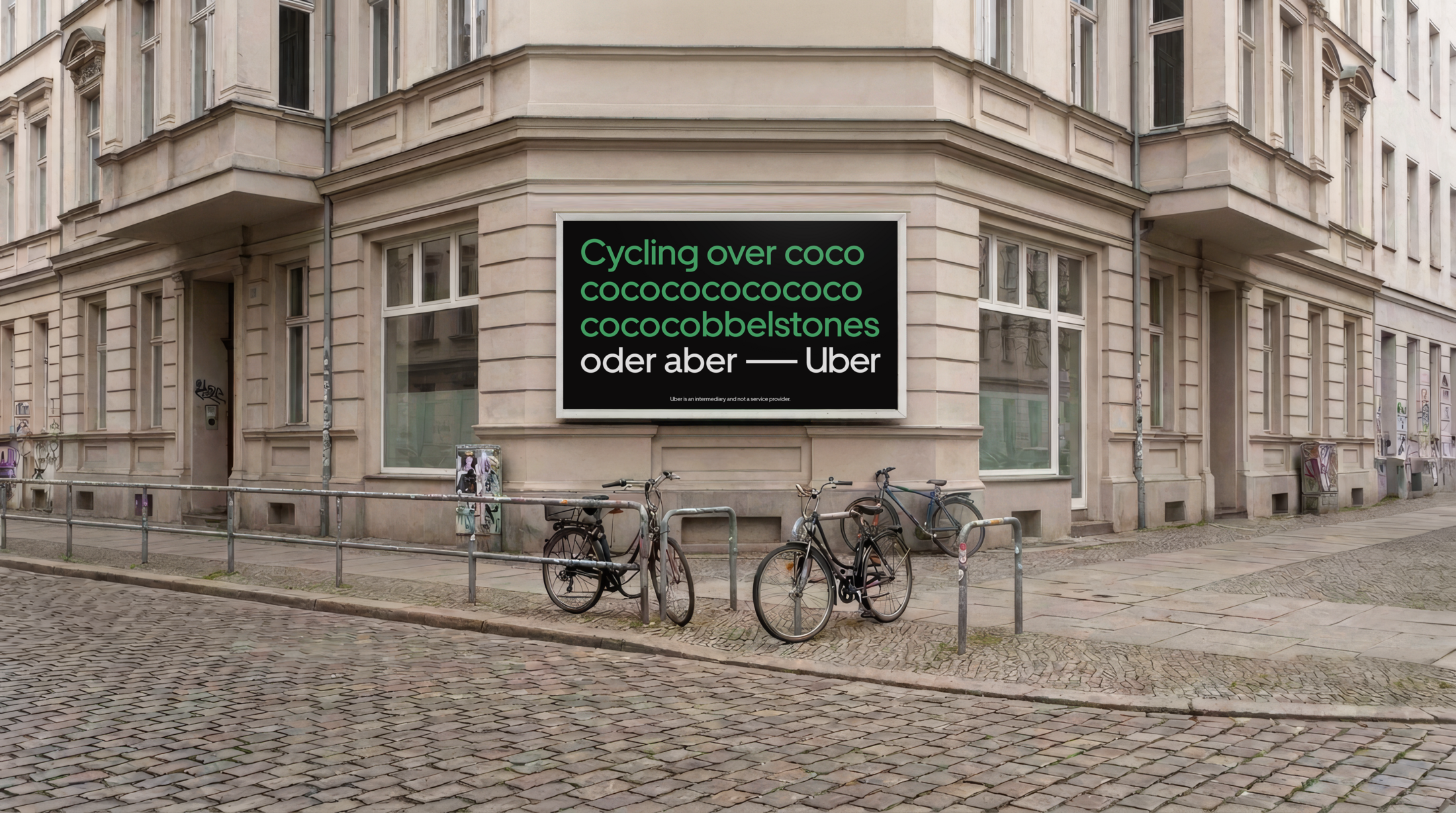
The new claim oder aber Uber grew out of a somewhat redundant German expression used to introduce another possibility. In the campaign, it gains an additional meaning and becomes an invitation to briefly interrupt the automatic response: people can continue doing things the old way, or they can order an Uber.
“The campaign highlights just how strongly mobility routines shape our daily decisions. That is exactly what makes the idea so relevant. It positions Uber as a genuine option in situations where many people may never have considered using the app before,” said Franziska Walter, director of marketing at Uber. The company is currently available in more than 90 German cities.
The films and accompanying assets are running across Germany on television, digital and DOOH displays, and social media. Its message does not seek to abolish the German Zwiebellook. It simply serves as a reminder that, when all those layers become too heavy, there is oder aber Uber.

