

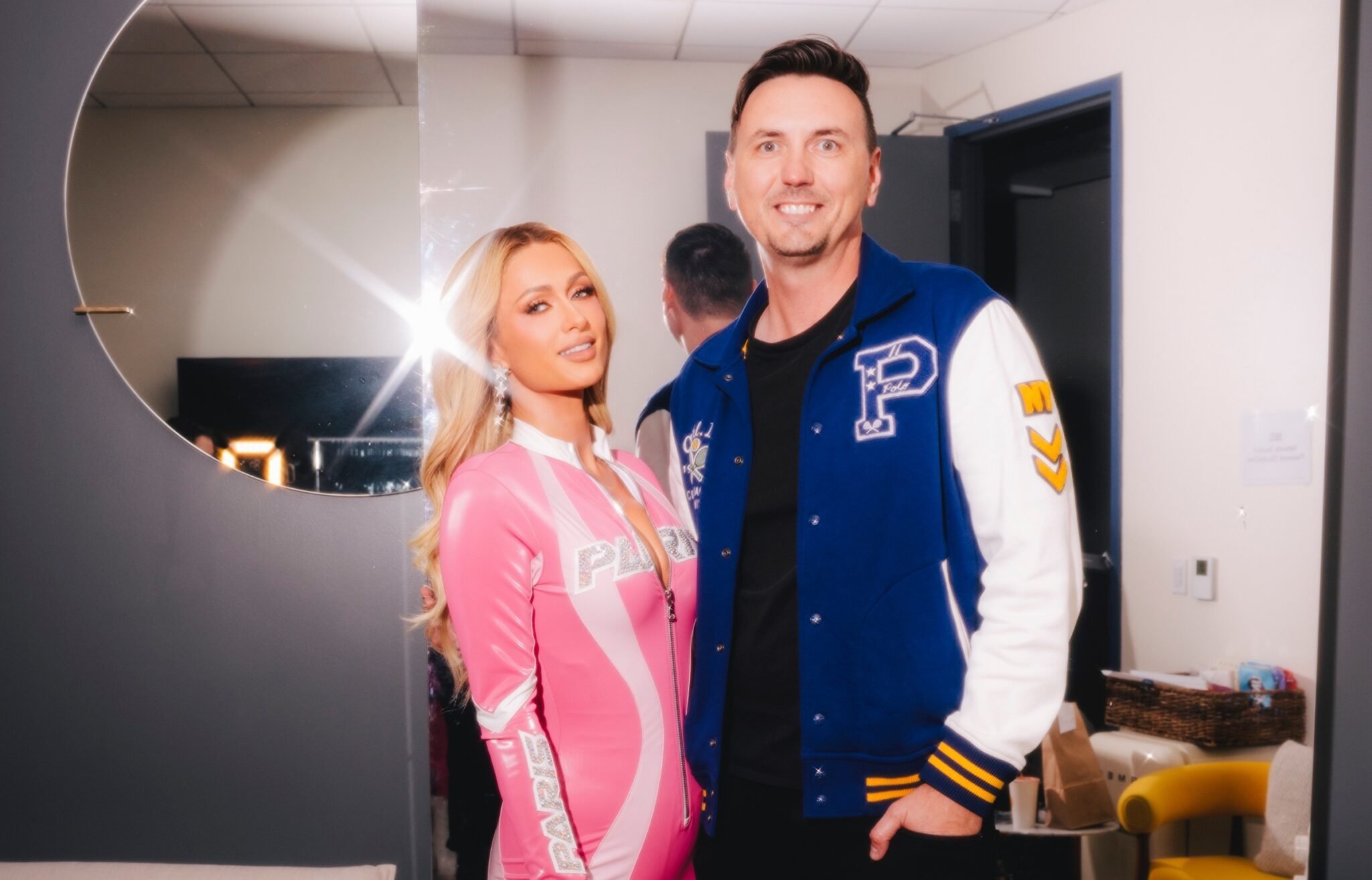
There are campaigns that emerge as production projects, and there are those that raise the question of how production itself is changing. Today, as generative artificial intelligence enters almost every phase of the creative process, the boundary between tools, process and authorship is becoming one of the key topics in the contemporary communications industry.
While some see AI as a threat to creative authorship, others treat it as a new form of infrastructure that accelerates idea development and expands production possibilities. It is precisely along this line between technology and creative intention that the latest campaign for the brand Carl’s Jr. was created, in which Paris Hilton returns in a reinterpretation of one of the most recognizable moments of pop culture marketing. In this campaign, nostalgia becomes an entry point for audiences, while generative AI simultaneously functions as part of the production process that accelerates the development of visuals and ideas.
Behind the creative concept is Nik Kleverov, Chief Creative Officer of the agency Native Foreign, a creative known for working on projects that combine technology and narrative storytelling, from his work on the series Narcos to one of the first AI-generated brand films for Toys“R”Us. In a conversation with Media Marketing, he talks about how AI is changing production processes in advertising, where creative authorship begins today, and why nostalgia often becomes a bridge between new technologies and audiences.
The project taps into a very specific cultural nostalgia while simultaneously showcasing AI-enabled production. What was the deeper strategic intention behind revisiting such an iconic campaign – was it about cultural memory, brand differentiation or something else entirely?
The original Carl’s Jr. spot is burned into pop culture. Revisiting it with AI let us tap that memory while showing how modern production can reinterpret an icon instead of just copying it. Plus, it was really fun to show the evolution of Paris: she’s no longer washing the cars herself. She too is leaning into the ‘age of AI’ for a task she doesn’t have to do anymore!
There is ongoing debate about whether AI challenges creative authorship or simply expands it. When AI becomes embedded in the workflow, how do you define authorship and creative ownership in a way that remains meaningful?
Authorship still comes from taste and direction. AI can generate options, but someone has to decide what belongs in the frame and what doesn’t. The series of thousands of micro decisions which is filmmaking inform the finished product.
Can we say that AI in advertising today is what Photoshop was in the 2000s – a tool that first sparked moral panic and then became the standard?
That analogy is pretty close and one I’ve used many times. Photoshop scared people at first too, then it quietly became part of the toolbox. Now it’s considered a “traditional” tool. How many years will it be before we think that way about AI?
When it comes to significant brand campaigns, would you say that clients are fully ready to lean into AI-powered workflows, or does human creative leadership remain a crucial reassurance factor?
Clients are curious, but they still want a steady creative hand on the wheel. Leadership and taste matter more than ever. I actually don’t think that will change, as each brand is a steward of their own story and unlikely to “leave it up to AI.”
It comes off as a paradox, AI is seen as a symbol of the future, but often works best when it brings the past back to life. Is nostalgia actually the bridge that helps audiences accept a new era of production?
Nostalgia gives audiences a familiar doorway. Once they step through it, you can show them something new. Bringing the past to life seems like an interesting avenue at the moment.
Many brands are currently leveraging nostalgia, but not all succeed. What distinguishes nostalgia that drives brand relevance from nostalgia that feels like creative retreat?
Good nostalgia understands why people loved the original moment. Lazy nostalgia just repeats the surface details and hopes the audience remembers the feeling. In our case our audience has evolved and also been mixed in with an altogether younger demographic that might not even know the original spot! So it has to work on both levels.
How much does AI really speed up the campaign’s production? Does it save more time, money, or mental space for creative experimentation?
AI compresses the production timeline in a big way. It frees up time and mental bandwidth so the team can explore more creative directions. Smaller teams like ours are also able to do more and compete on the top-tier level, which was never possible before.
You’ve described AI in this campaign as production infrastructure rather than a creative gimmick. How did that mindset practically influence the way your team structured ideation, pre-production and execution compared with a traditional commercial workflow?
We treated AI like a production pipeline, not a magic trick. That meant planning for it early, building workflows around it, and keeping the creative decisions human.
Does AI democratise creative production, or does it actually widen the gap between those who know how to direct the technology and those who simply use it?
The tools are available to everyone, but the real separation comes from people who know how to direct them with intent. I think strong knowledge of fundamental storytelling and filmmaking are absolutely imperative to creating something good.
Looking beyond this campaign, do you believe AI will fundamentally reshape how agencies structure creative departments, or will it mostly change execution while strategy remains human-driven?
Strategy and storytelling will stay human for a long time. The way we bring those stories to life will continue to change and evolve. The truth is, someone could make a fun weekend project that looks really good. That might lead clients to say “well I saw someone made this in less than a week – what do you think, can you make us a project in less than a week?” My response is always: “Can you answer an email in less than a week?” Brands are big, complex, and packed with specificities you can only learn by getting to know the people inside that brand. There are lots of stakeholders and different initiatives. There’s no replacing that process, but being there with great chops and technology can give you an edge.
AI often promises efficiency and certainty, but creativity has traditionally emerged from risk. Is AI making the industry bolder, or actually more conservative?
The tools remove friction, which can encourage experimentation. The risk is that some teams may use them to play it safe and generate what already works. Be different.

