

There are festivals that follow the industry and those that actively shape it. Dani komunikacija has for years belonged to the latter category – as a space where ideas, people, and different perspectives on what communication is today and what it is becoming come together. In such cases, the role of the organizing committee is not only operational, but essentially curatorial: they select themes, open questions, and set standards that later reflect across the entire industry.
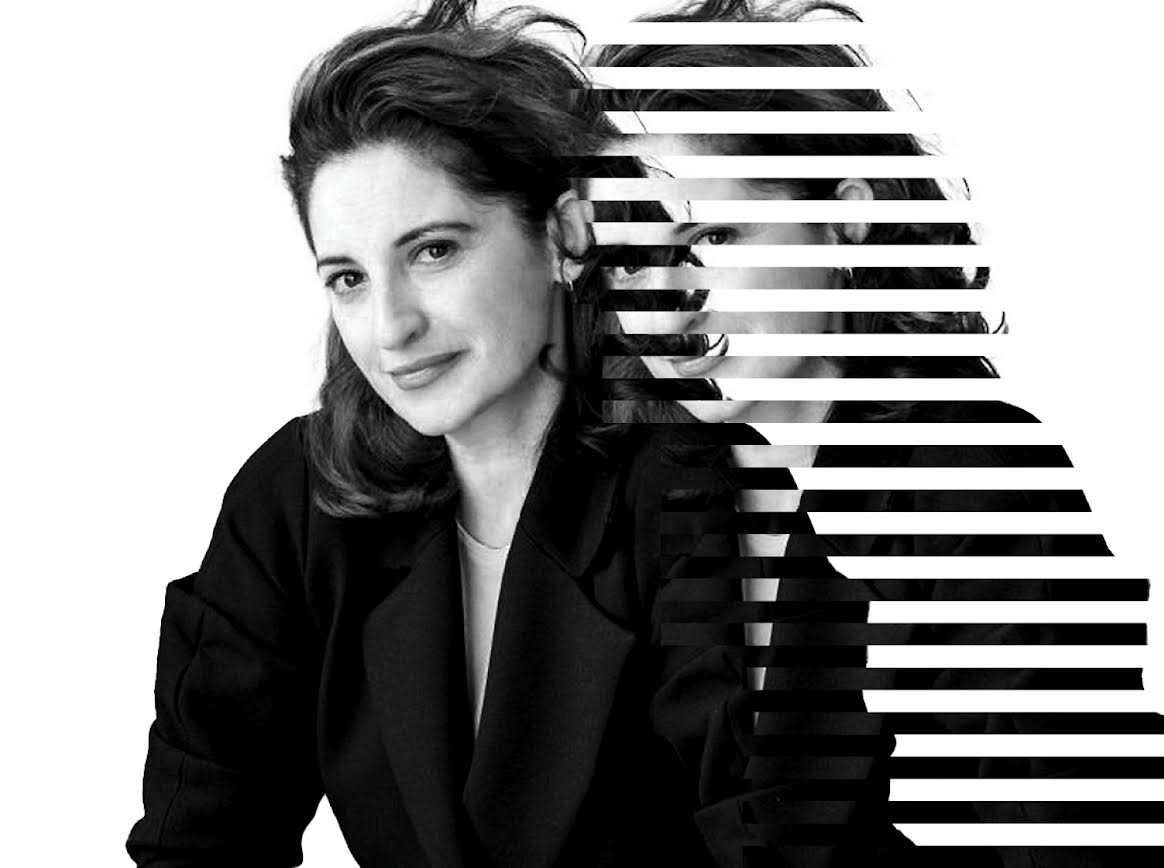
In a series of conversations with members of the festival committee, we speak with those behind this process – people who simultaneously live the everyday reality of agency work and think long-term about the direction of the communications industry. Among them is Jelena Fiškuš, president of HURA and co-founder of Studio Sonda, whose position naturally combines a strategic view of the industry with deeply rooted creative practice.
We bring you a conversation with Jelena Fiškuš about communication as a practice, but also as a space of constant questioning. About where creativity truly emerges and how different contexts, from small communities to global stages like Cannes Lions, shape the criteria by which we evaluate good communication today. Fiškuš also opens the question of trust in award systems, the importance of clarity in presenting ideas, and the ways festivals like Dani komunikacija respond to changes brought by new technologies and tools, including artificial intelligence.
You are the president of HURA and a member of the festival board organized by HURA. Where do these two roles come into tension and how do you resolve it?
I would say they are compatible, considering that Dani komunikacija is one of the most important projects of HURA. The success of Dani komunikacija is the success of HURA, and vice versa. And of all our members.
You are the co-founder of an agency from a place of 300 inhabitants that has become one of the most awarded in Croatia. What does that say about where creativity actually lives, and does that perspective change what you personally look for from DK as a festival?
I believe that creativity lives in every individual, regardless of where they live or their field of work – it is only a question of how much space and encouragement it is given to flourish. Of course, the place where you grow up and operate influences you as a person, defines you in many ways because it is part of your identity and everyday life, and it also affects creativity, which actually arises from both frustration and inspiration.
Someone who comes from a small community surrounded by nature may have more space for introspection or distance, an outside perspective, and as much as they enjoy that beauty and peace, at the same time they have a stronger desire for networking that stems from a certain frustration of isolation… while someone from a big environment is more agile and creative in solving problems brought by fast-paced life and seeks to resolve the frustration of a lack of peace and all the challenges that come with a large system… and all of this is beautifully intertwined.
From that perspective, at the DK festival I will probably not be looking for opportunities to watch sunsets or organize business meetings as walks by the sea at dawn, because I have that almost every day. But the opportunity to socialize with colleagues, exchange ideas, and learn – yes, because that is not as accessible to us otherwise. It is great that DK offers a lot of quality for all our different faces and needs.
Is it wrong to say that a festival that rewards creativity sometimes does not reward the bravest work, but rather the best-funded work presented to the jury?
I think, and I want to believe, that it is wrong. I believe in the integrity and expertise of jury members – that they know how to recognize what the best work is and that they will not be misled by an expensively presented case study if it is not backed by a concrete idea, strategy, or result, depending on the type of competition.
It is true that sometimes ego can get involved in judging, sometimes certain works may be ahead of their time so their value is only understood later, when they win awards at external festivals, sometimes even for those of us working in the creative field it is difficult to step out of our comfort zone when evaluating… In addition, different competitions and different juries evaluate different things… somewhere the idea is queen, somewhere results matter most, advertisers prefer more concrete work, creatives prefer those that push boundaries in ideas, etc… but I believe that everyone is looking for real value in the work and that the best are ultimately recognized.
On the other hand, a case for competitions simply must be very clear and very well prepared. That does not necessarily mean expensive, but clear – definitely.
Which format of work or type of communication that exists in the industry today still does not have a proper place at the DK awards, and what does that say about where the industry is actually going?
Each of the competitions at DK has its own organizing committees that every year reassess how to improve them and consider new categories in the context of the time we are in. For example, during COVID we introduced crisis COVID categories because it was logical that the work responded to that… competitions have now, for the second year in a row, included AI categories because they have simply become unavoidable in campaign creation and similar…
So I would say that the awards themselves and their categories are well structured, and if anything new appears that is missing and should be relevant, the organizing committees will definitely recognize it and put it on the table.
You were the first Croatian woman invited to the Cannes Lions jury. What did you see there that DK is already doing well, and what did you see that DK has not yet managed to capture?
I always say that our Dani komunikacija is the best festival in the world, because of the quality of the content, the charm of the destination, the excellent organization… Cannes Lions has all of that as well, just on a much larger scale, and if at DK you regret missing a lecture, believe me, at Cannes there is total FOMO.
Organizationally, both are at an exceptional level, there are almost no visible mistakes. Good practices from Cannes that are applicable to our market are taken into account and applied to DK, such as in competitions or in sessions where juries publicly comment on decisions, etc. And in many aspects, DK is completely original.
For example, what I consider important for DK is the fact that it addresses topics that are truly relevant to our market, and that is something we cannot get anywhere else – insight into all the challenges we face as a specific market and how to solve them. The volume of content that Cannes delivers is not something DK can, nor should, replicate, which is why some things are simply incomparable, but for those that are comparable, both festivals are at an exceptional level and highly recommended.
There is also strong mutual support between them – DK has, over time, positioned itself as an important event that is recognized in Cannes, followed, and supported in various ways and through different collaborations.

